Amazon Fire Tracker 2020: Images of the Brazilian Amazon Fires

Our innovative new app for Real-time Amazon Fire Monitoring has now detected over 350 major fires in the Brazilian Amazon this season.*

Specifically, we have detected 365 major fires as of August 17, since the first major fire detected on May 28.

The fire season is accelerating, as 79% of the major fires have occured in August.

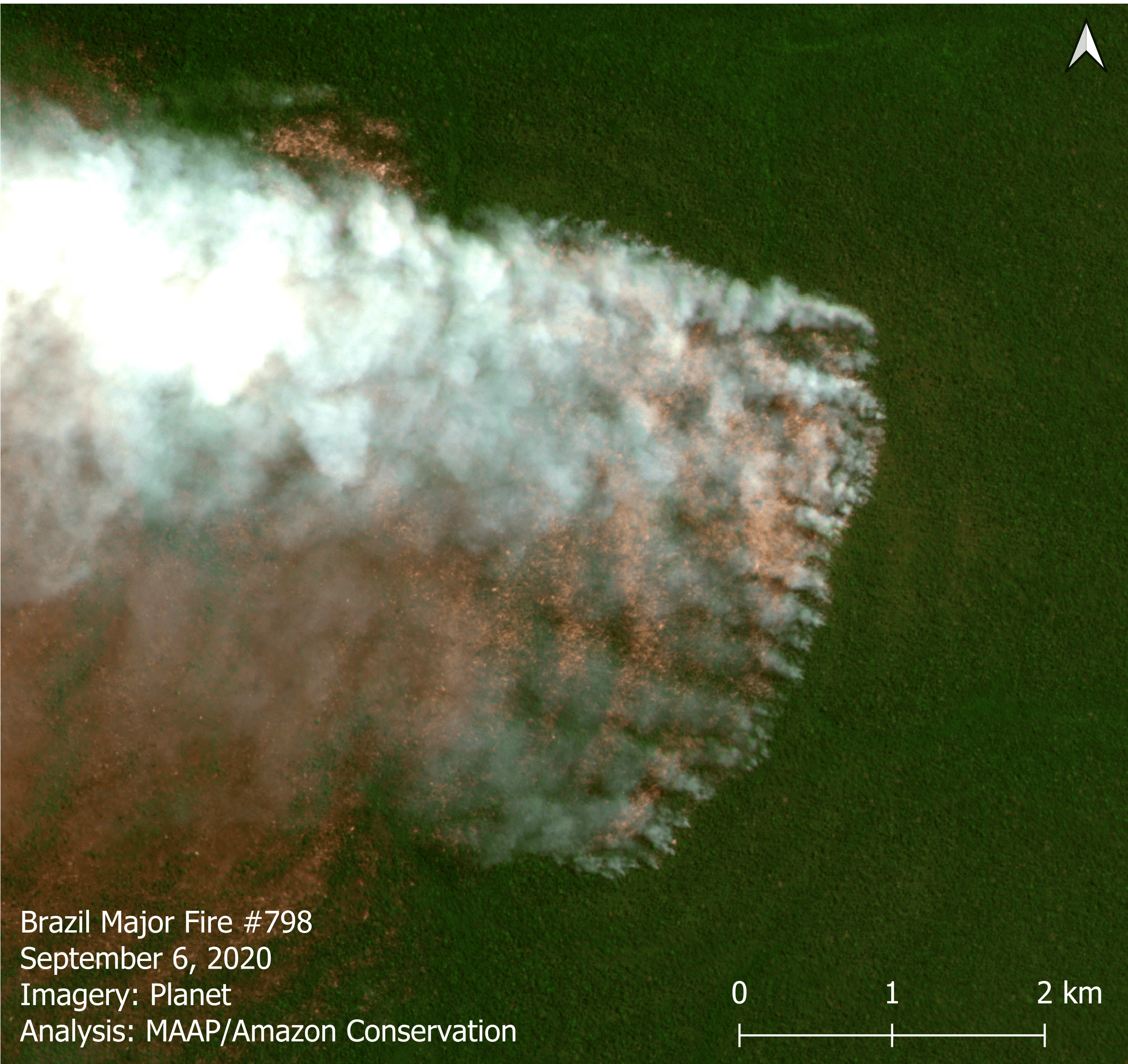
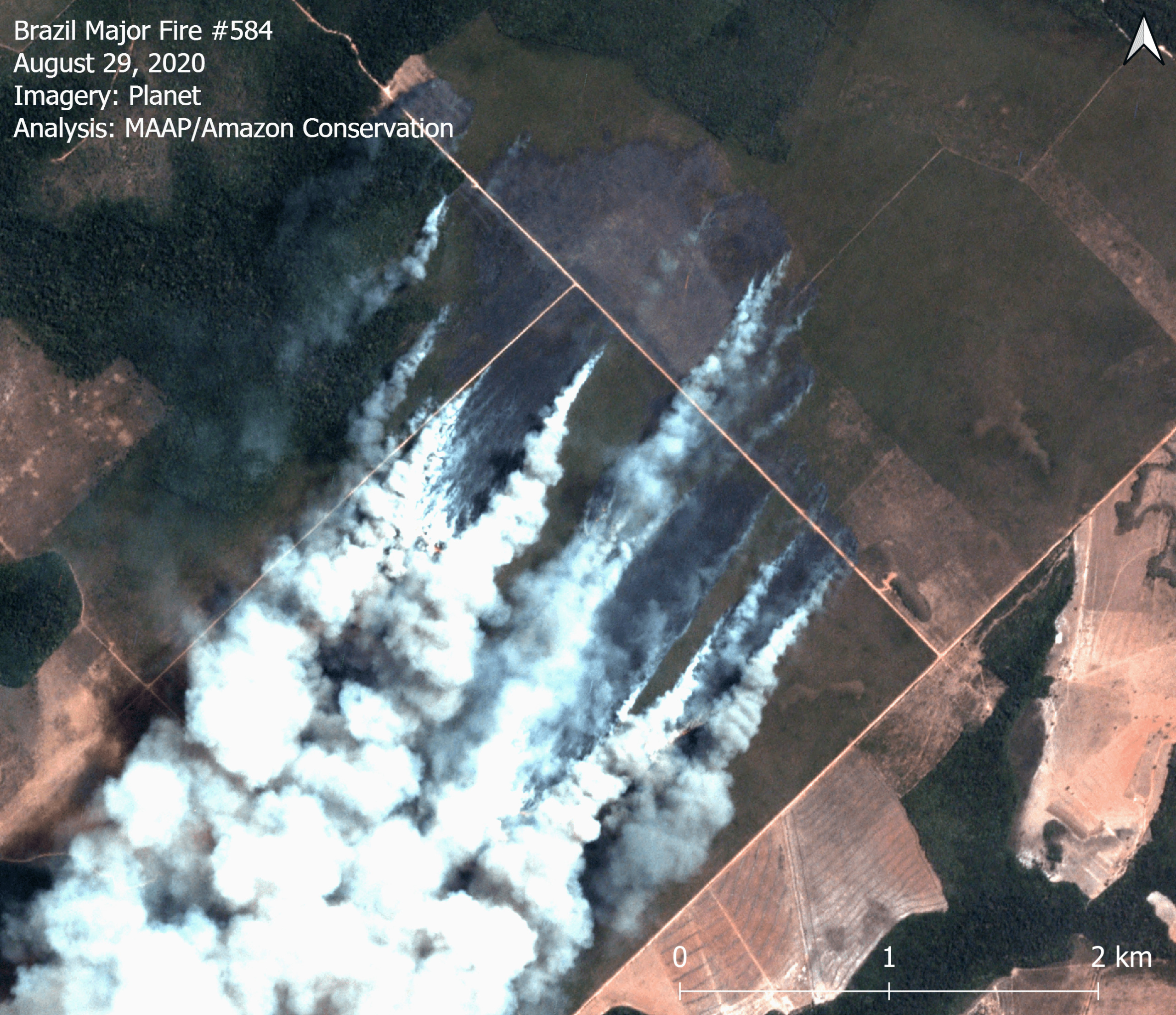
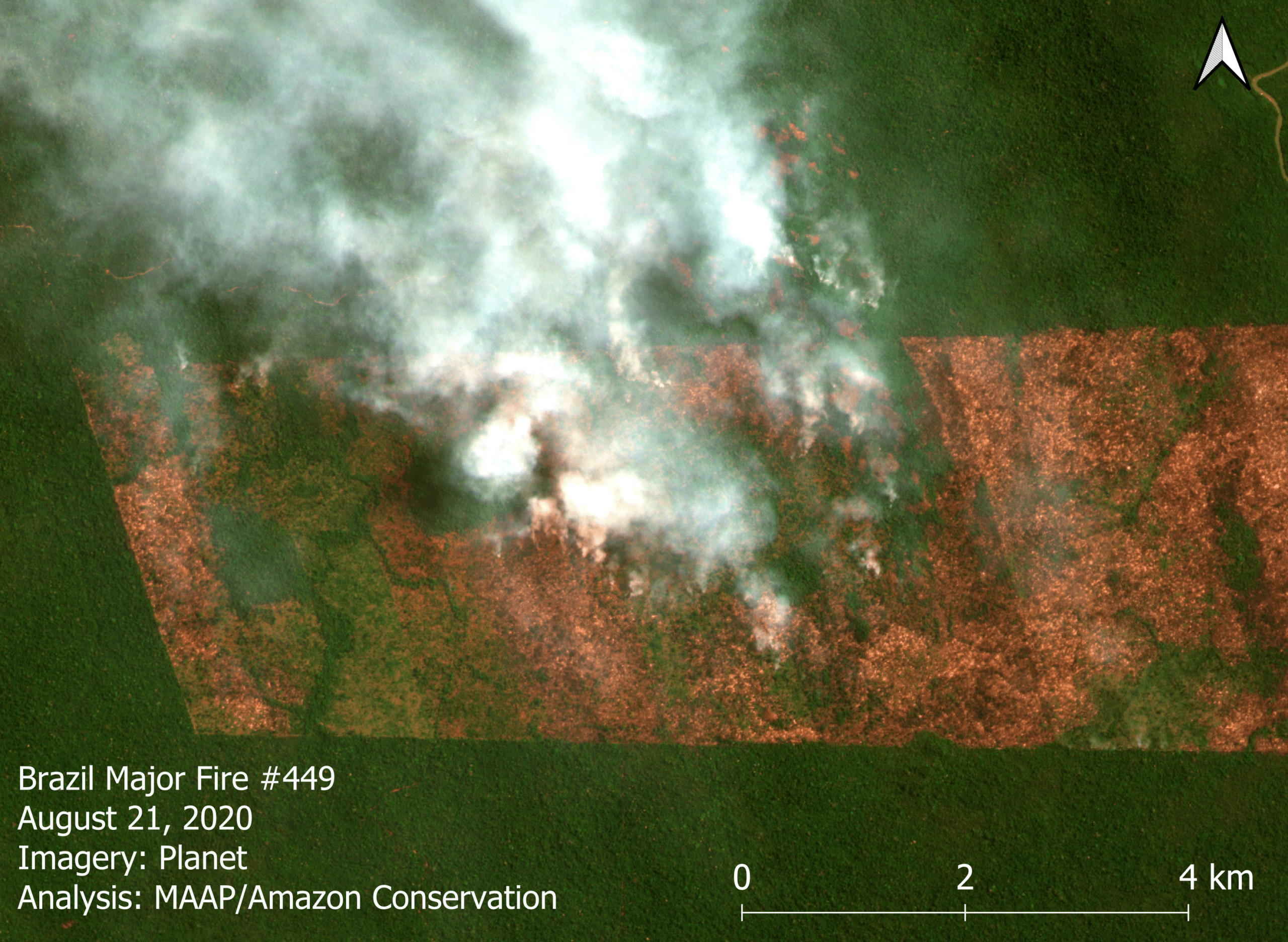
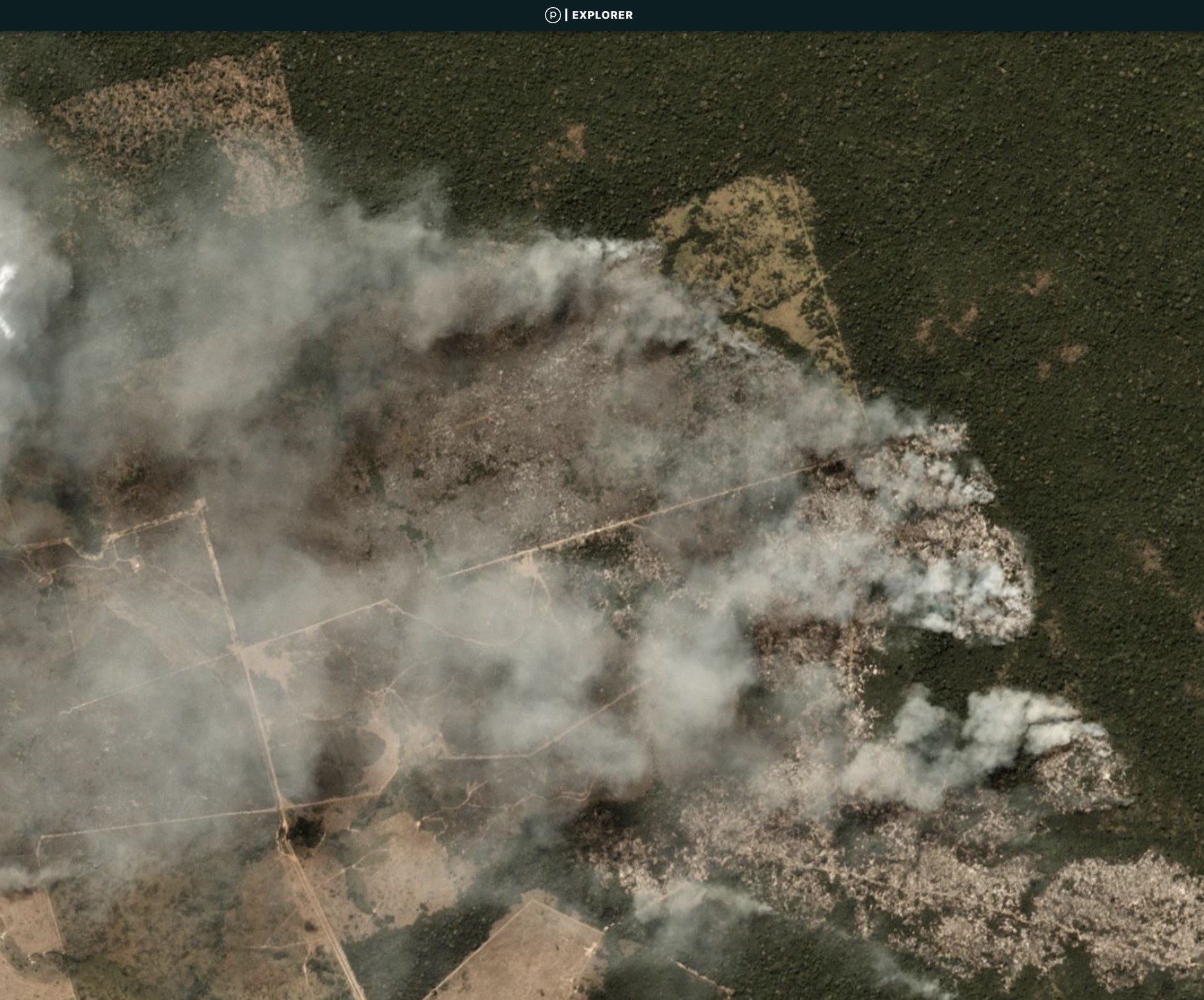
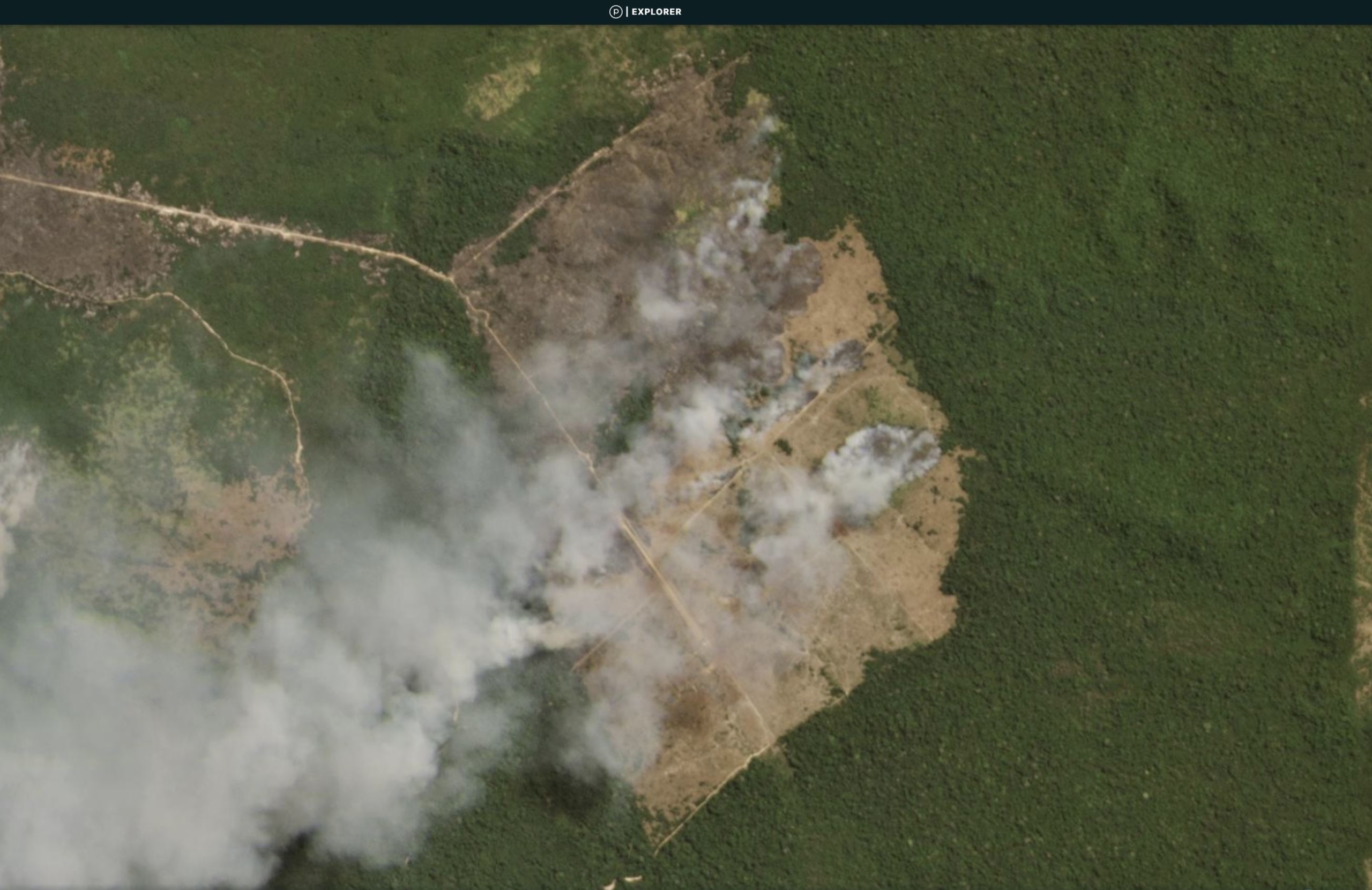
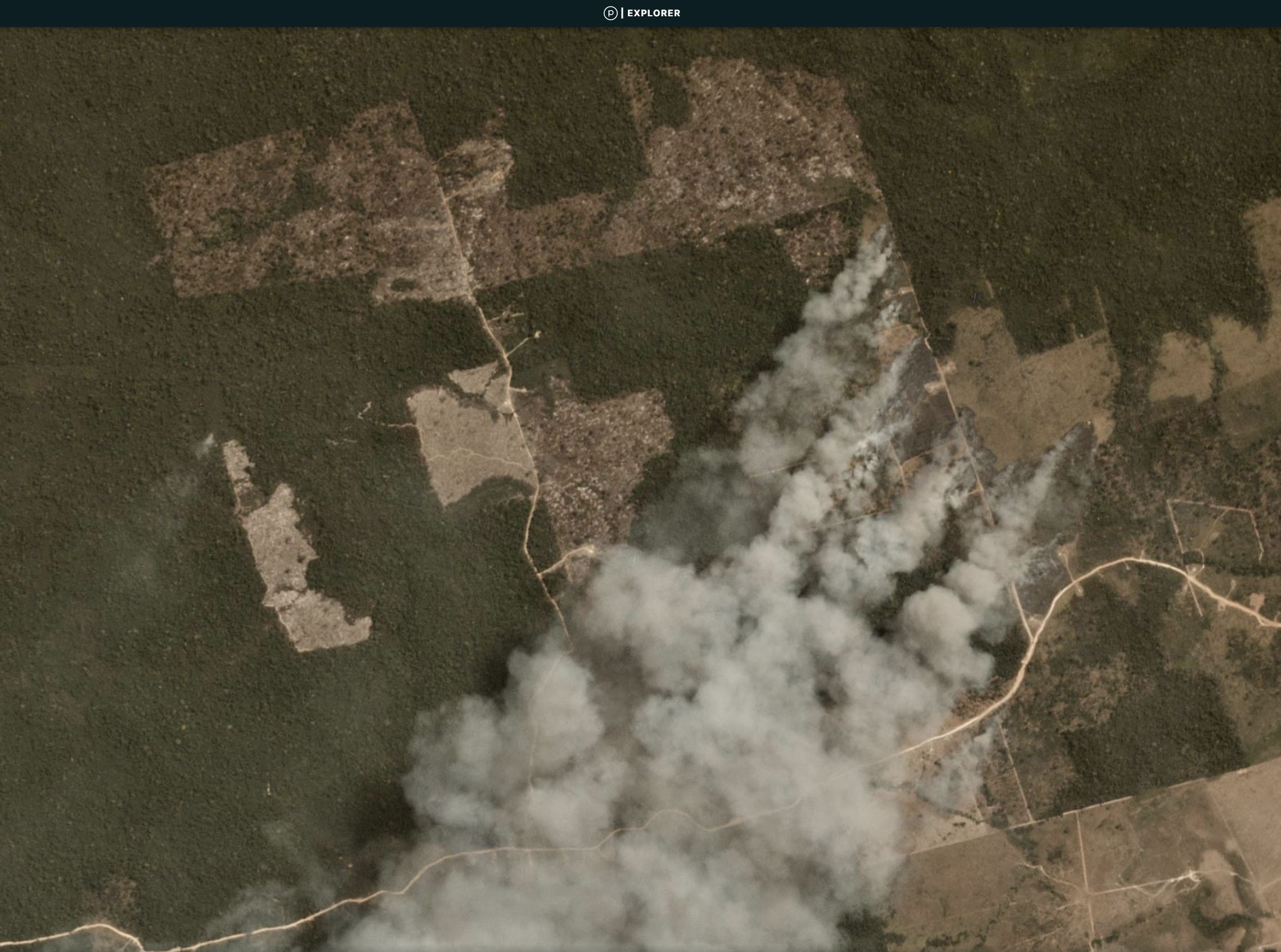
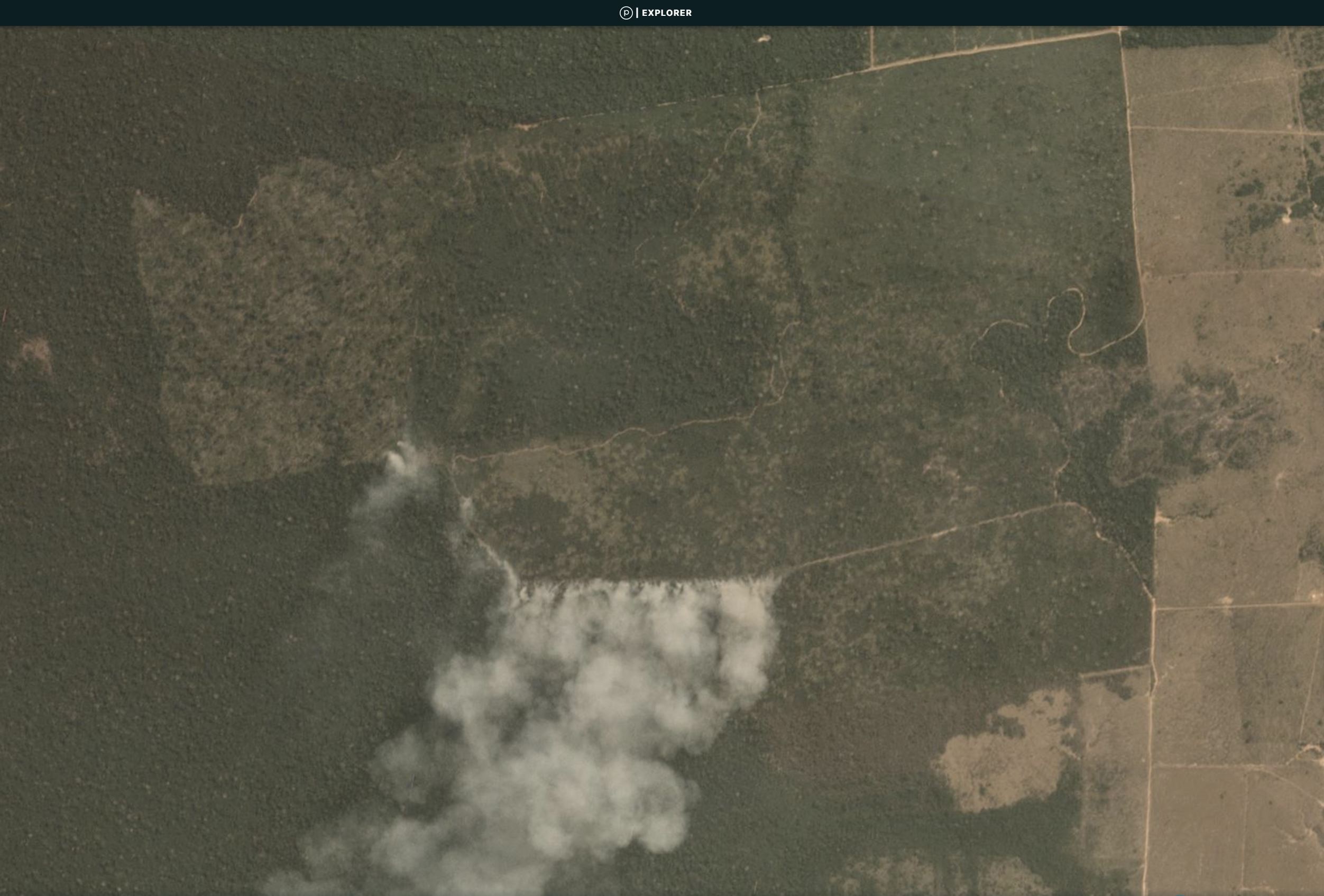
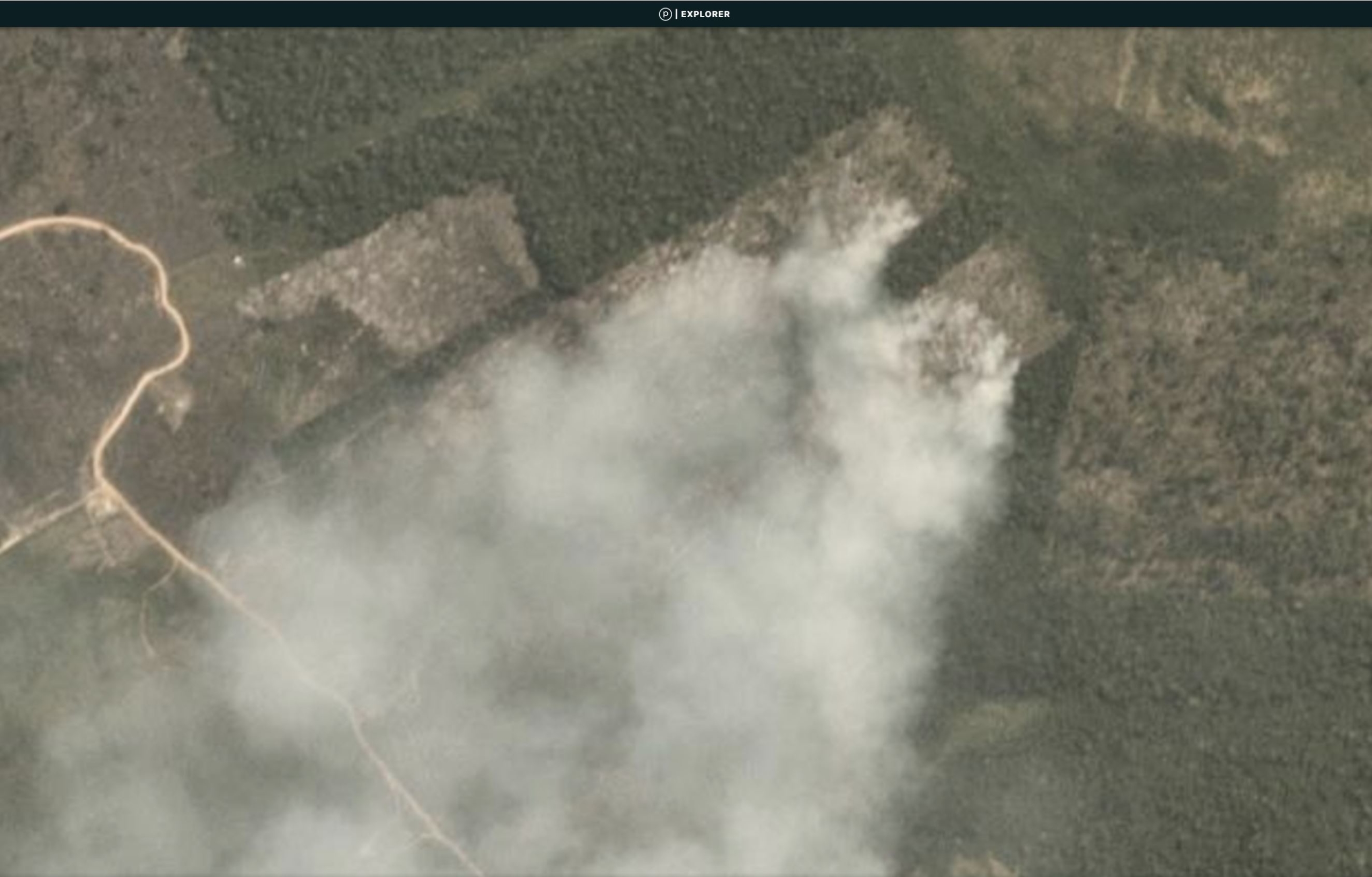
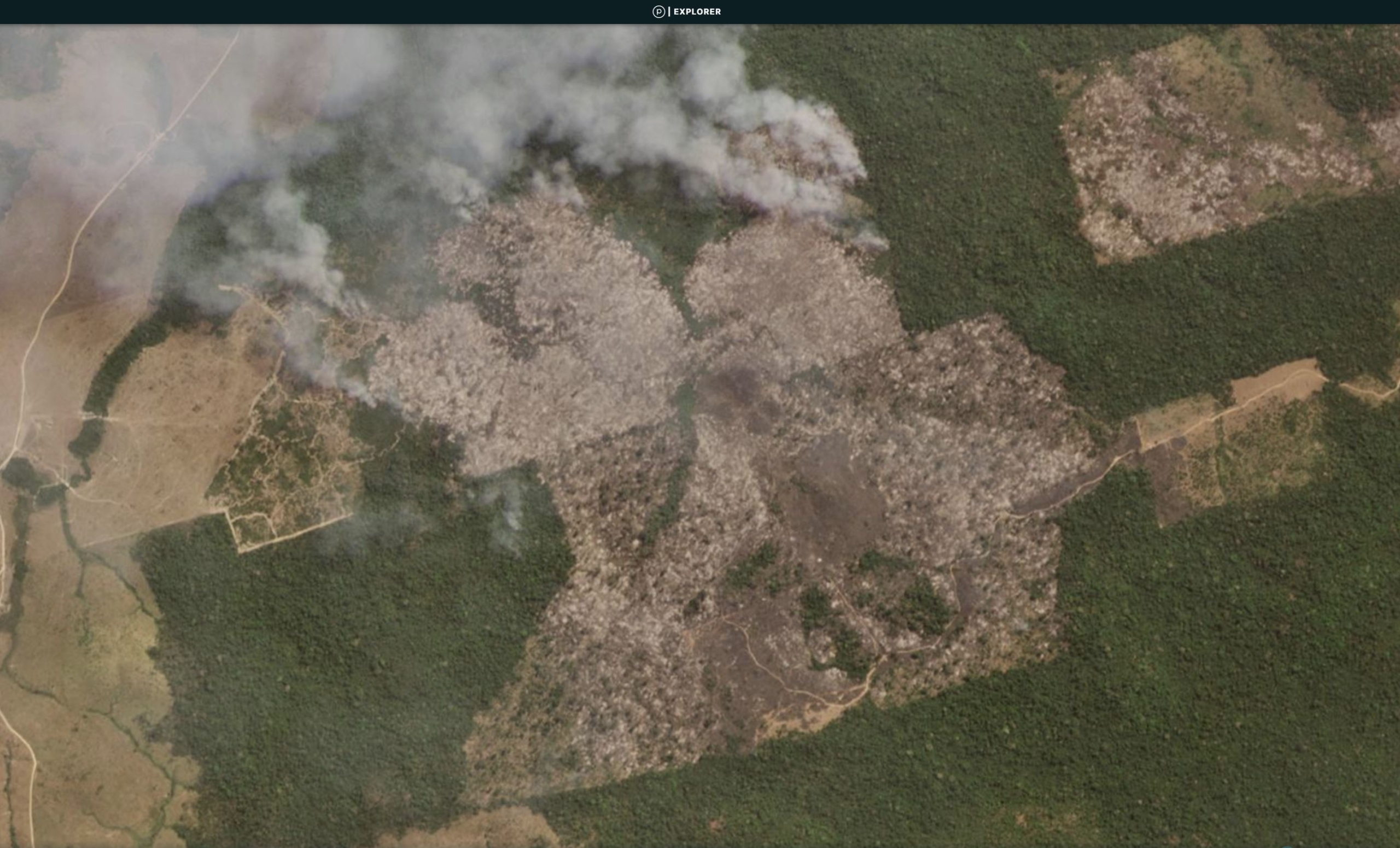
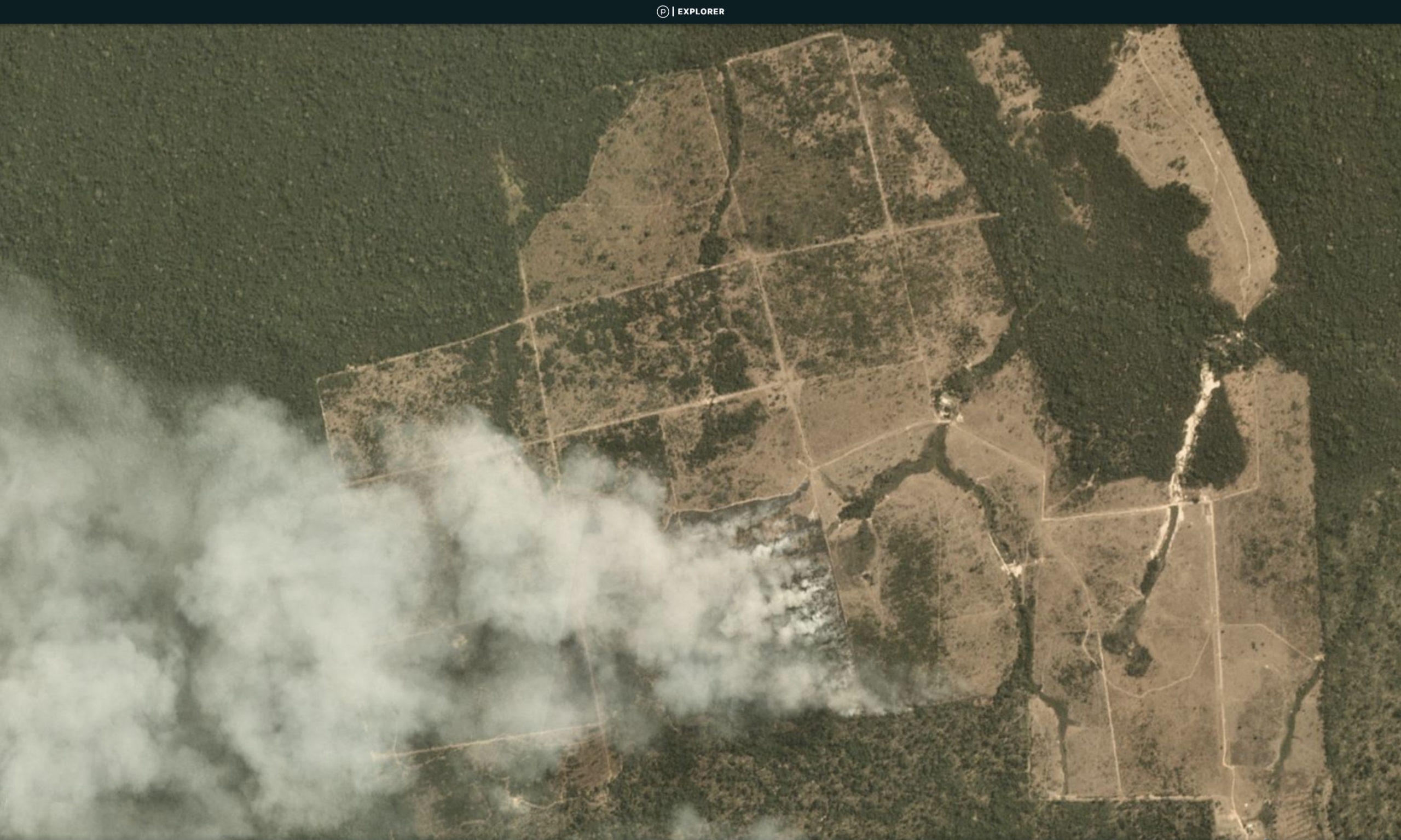
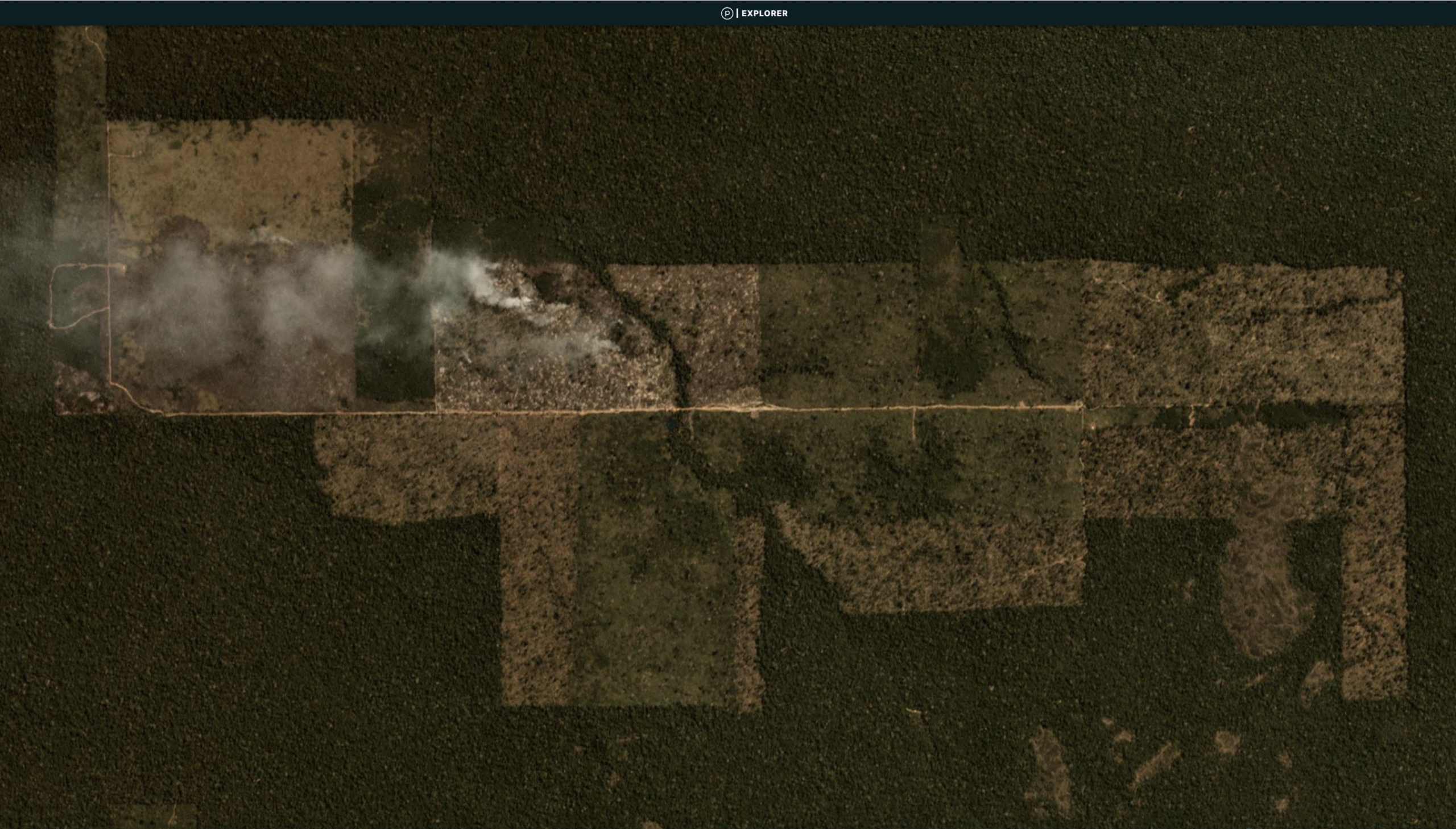
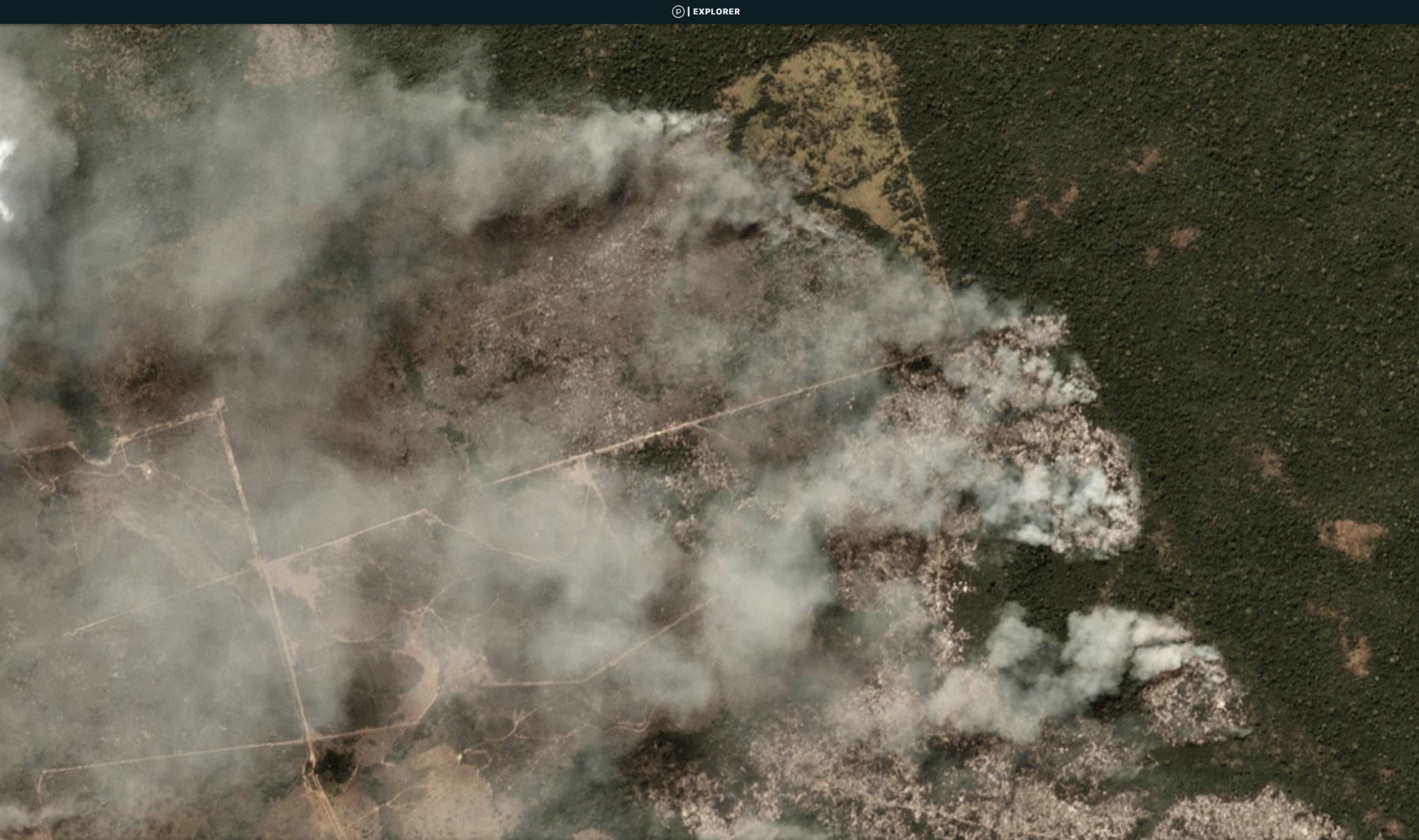
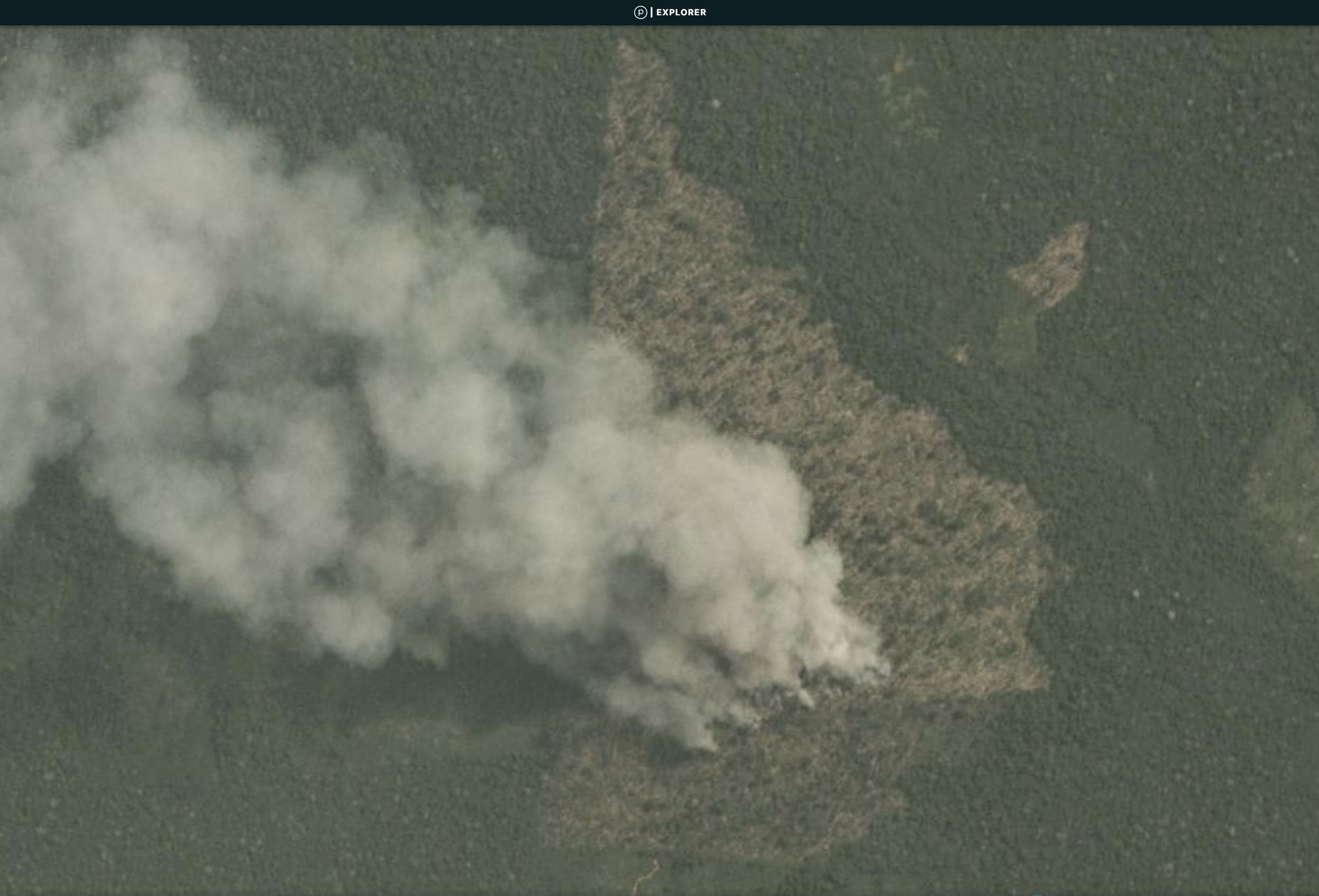
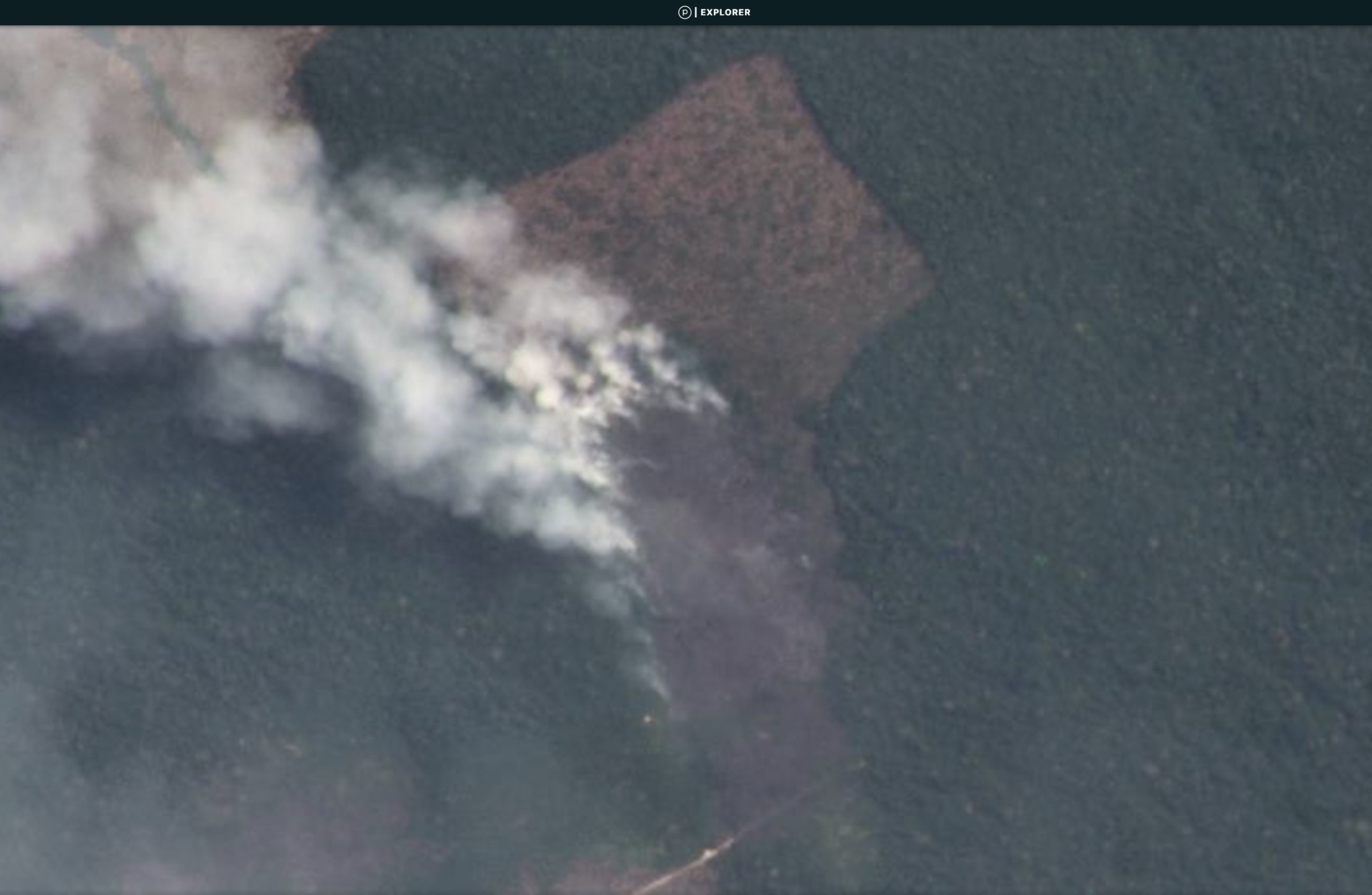
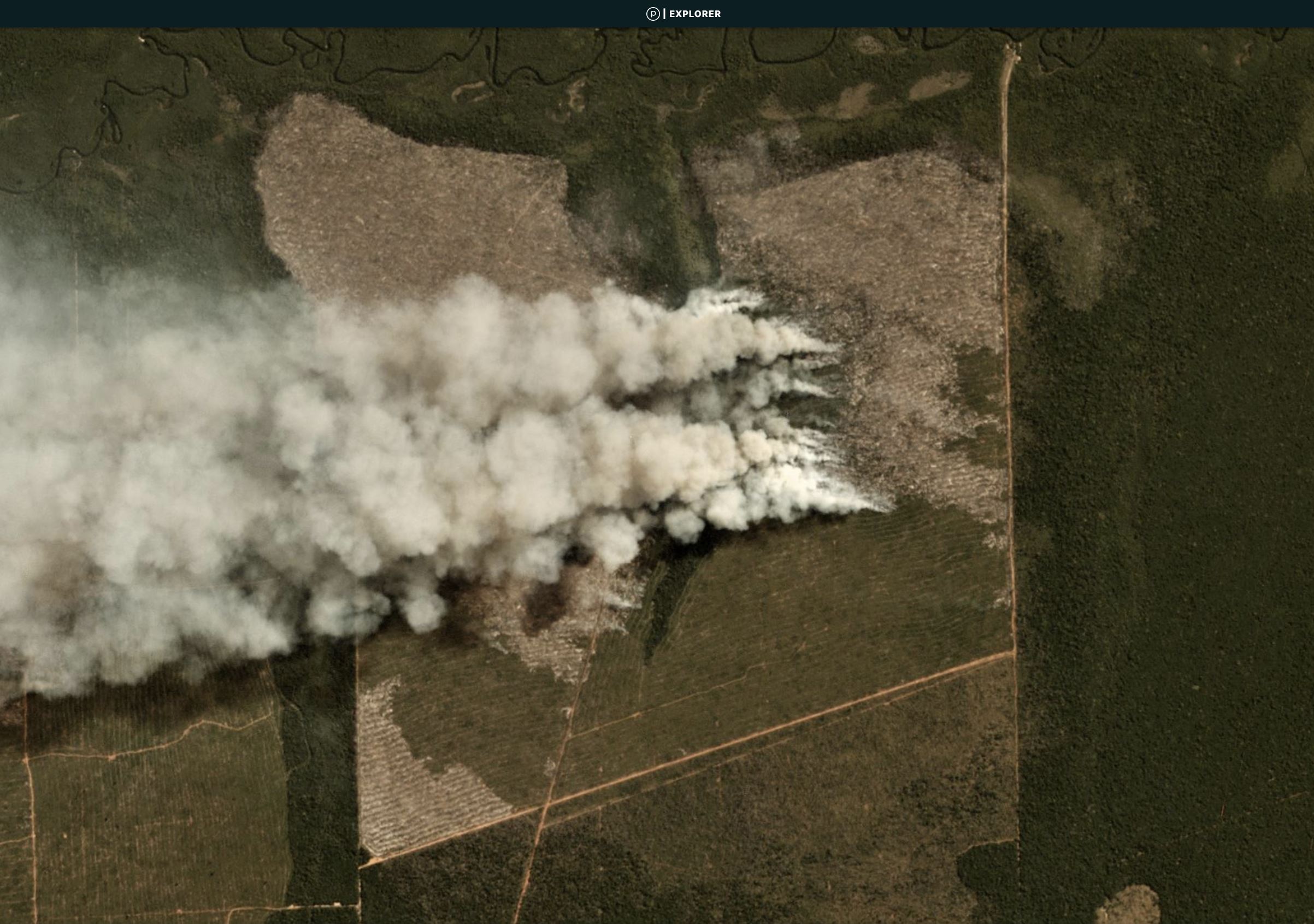
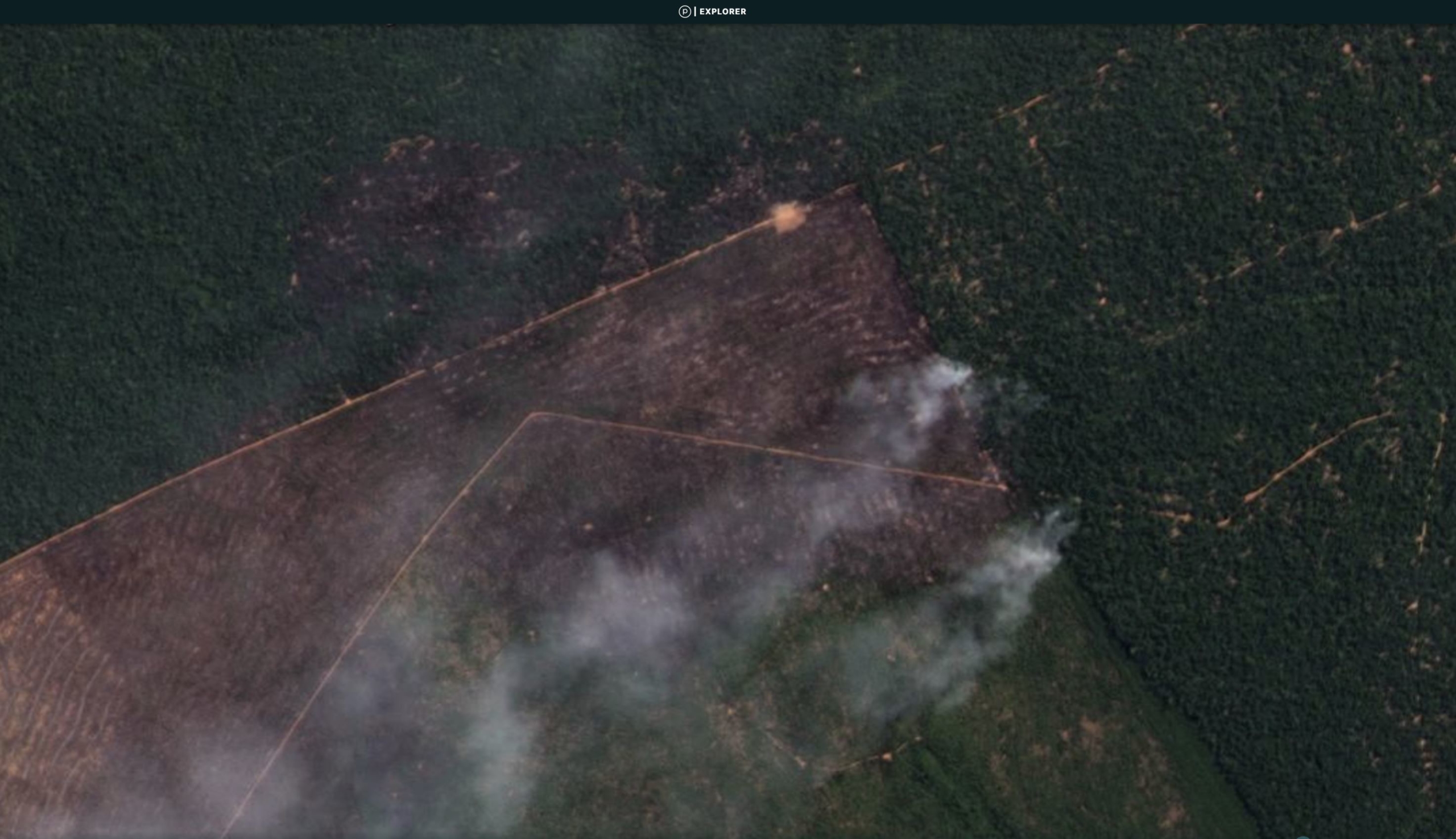
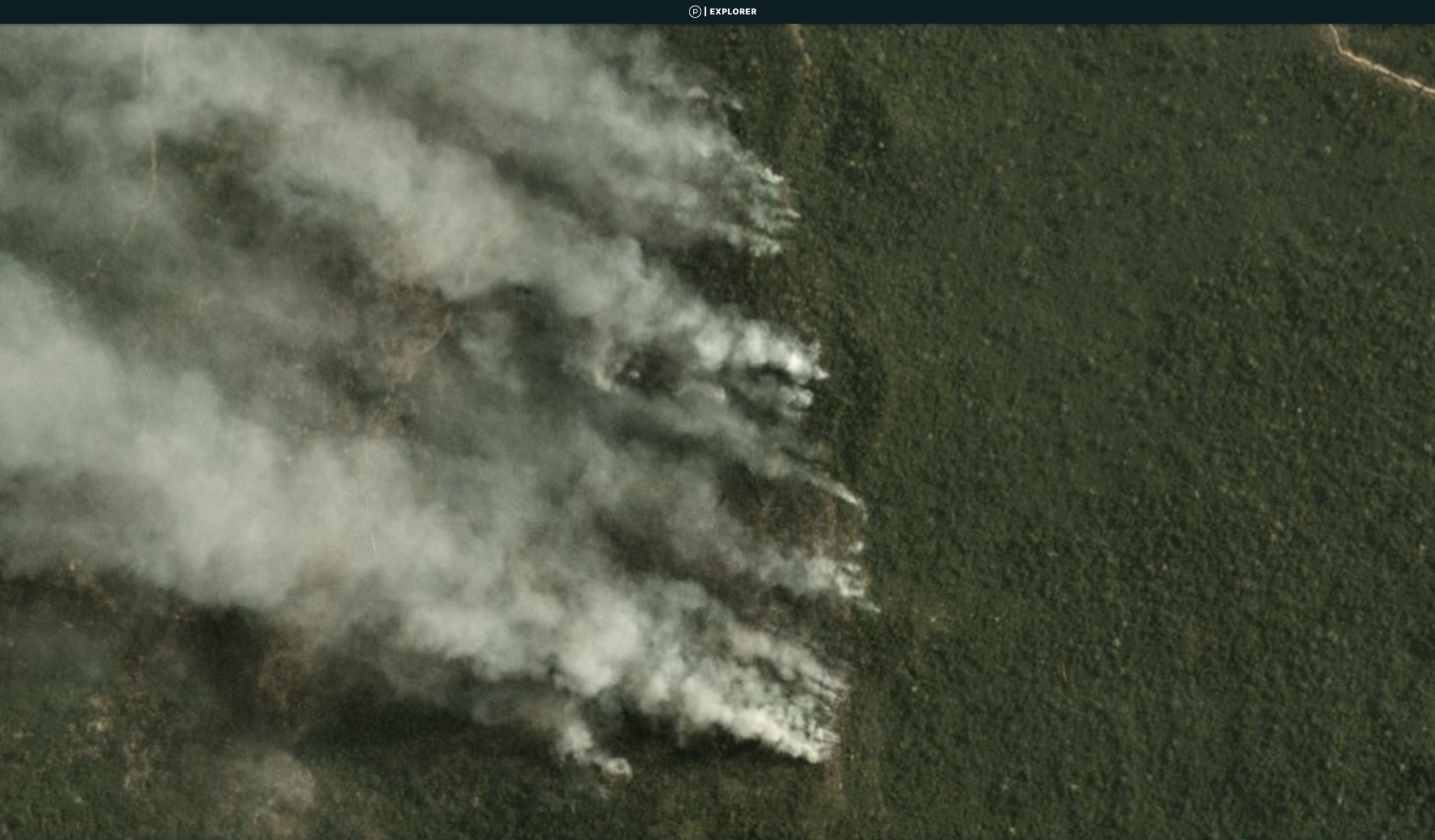
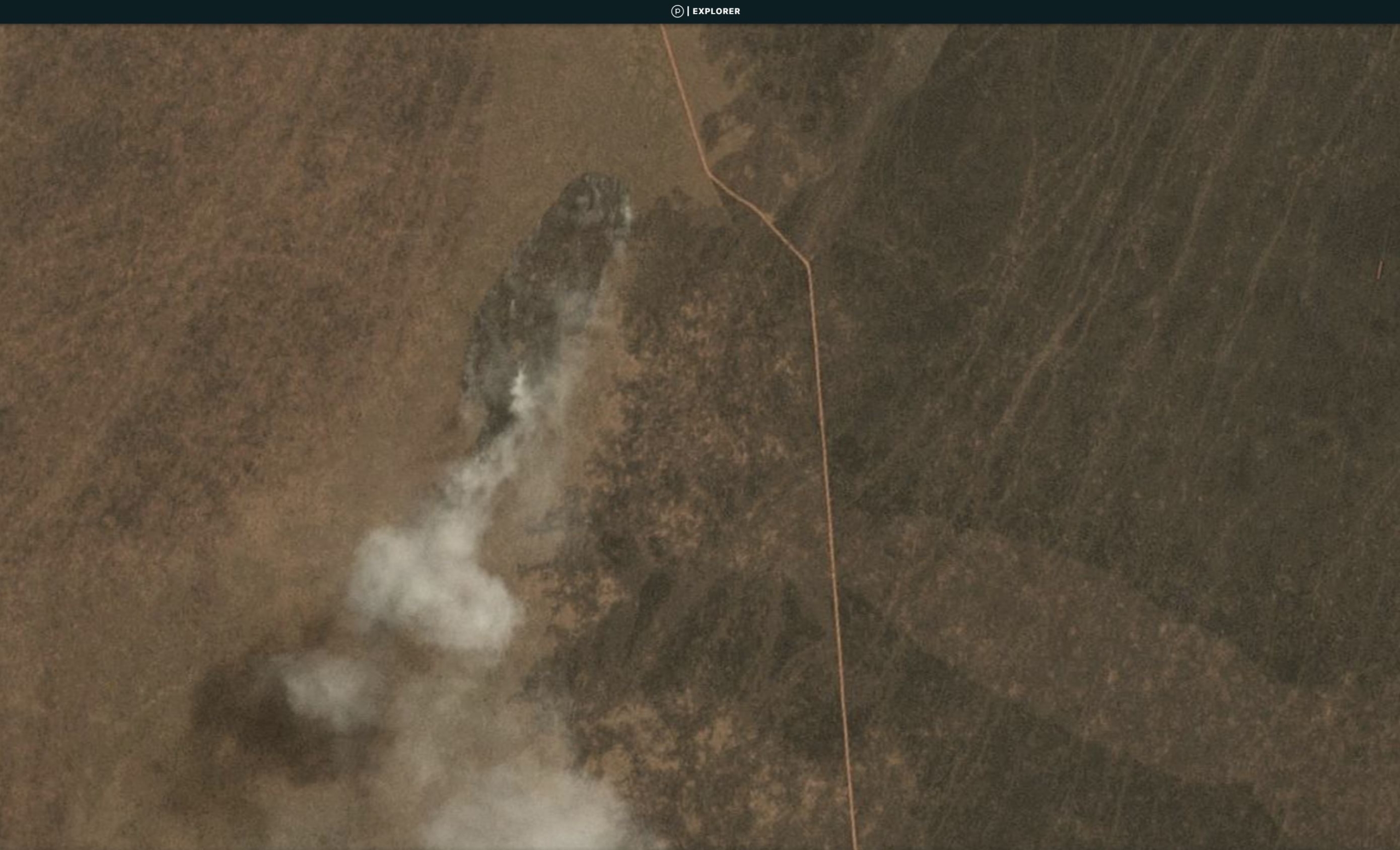
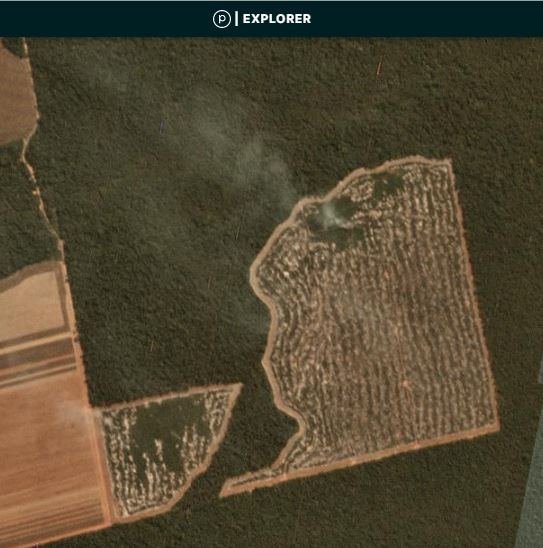
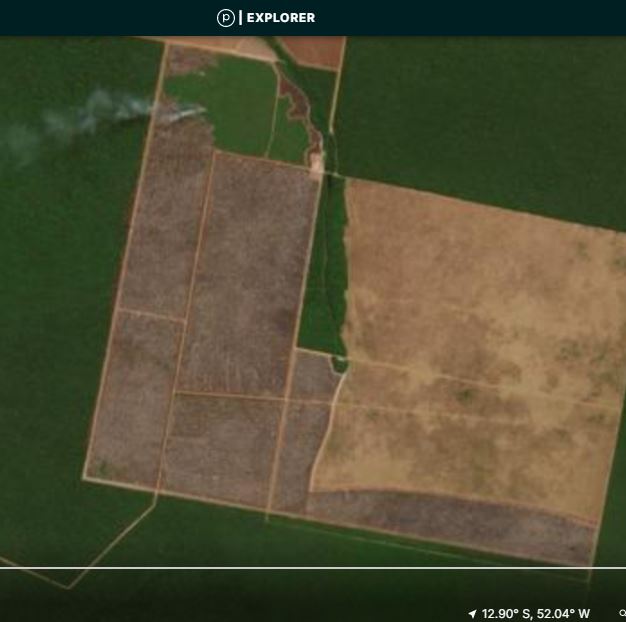
Below, we present a series of satellite images showing key examples from August 2020.

We highlight our key finding that the vast majority of major fires (88%burned recently deforested areas covering 557,000 acres (226,000 hectares). Thus, the fires are actually a striking indicator of the rampant deforestation currently threatening the the Brazilian Amazon.

We have detected 4 Forest fires (1% of the major fires) covering 2,790 acres (1,130 hectares) and 3 savanna fires covering 38,000 acres (15,000 hectares). The rest of the major fires are burning older agricultural areas.

Other key findings include:

  • The vast majority of the fires (96%) are illegal, occuring past the 120 day moratorium established in July.
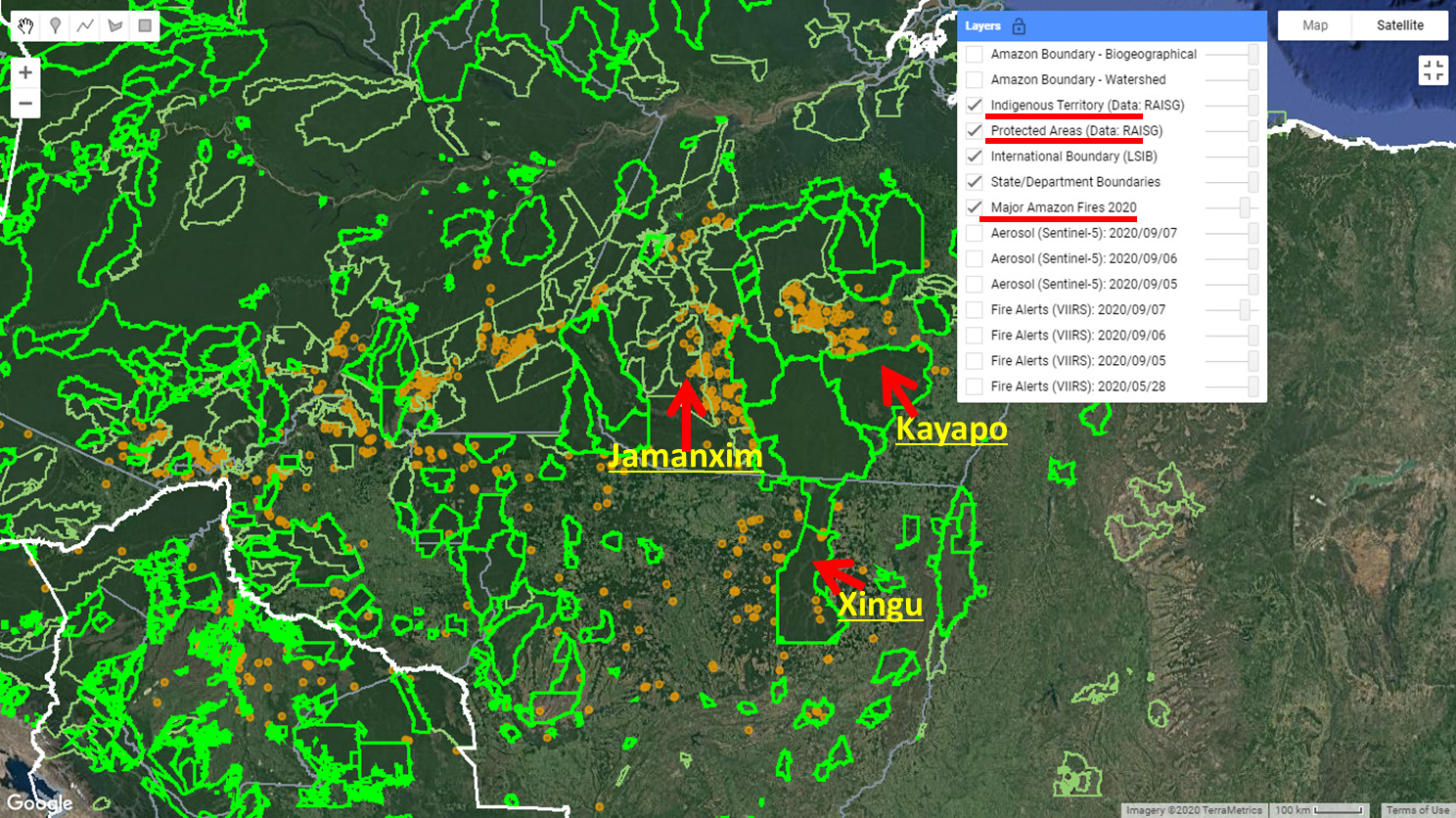
  • At least 18 of the major fires have been in protected areas or indigenous territories.
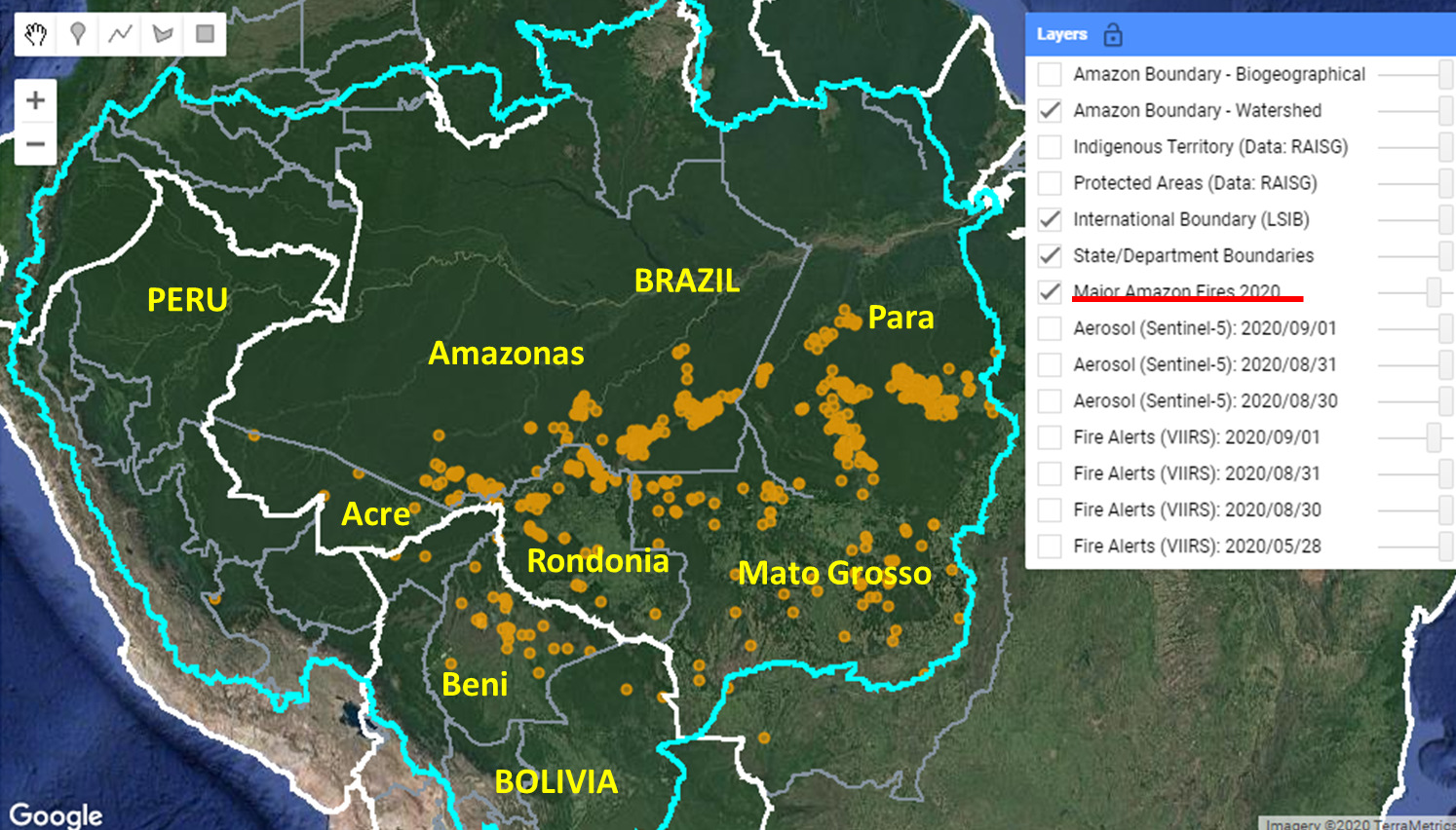
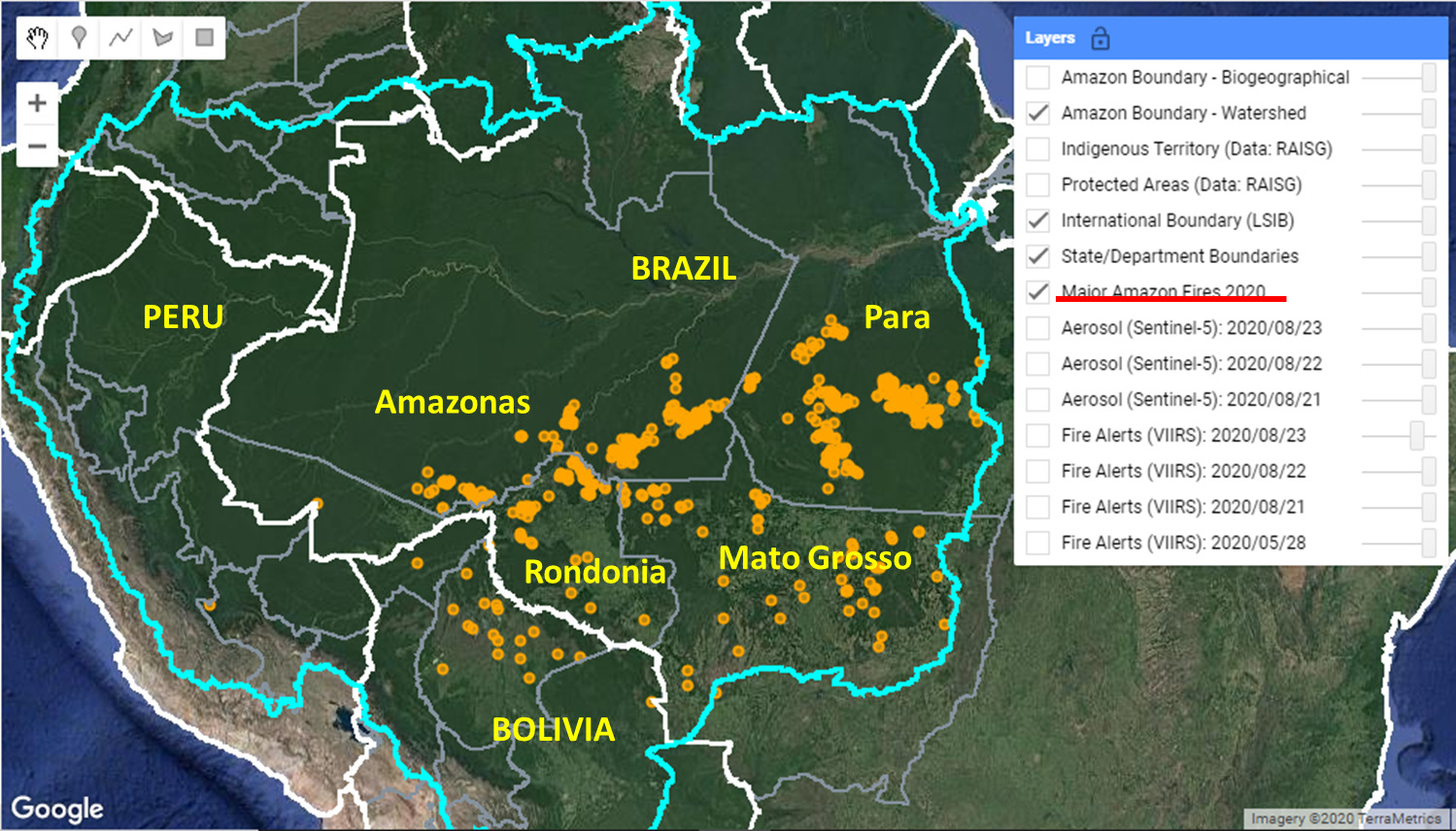
  • Most of the fires (70%) have occurred in two departments: Amazonas and Para. Mato Grosso and Rondonia each account for 15%.

We have detected an additional 10 major fires in the Bolivian Amazon, and that will be the feature of a future report.

Images of the 2020 Brazilian Amazon Fires

1) Fires burning recently deforested areas

Brazilian Amazon Fire #338 (August 16, 2020)

Brazilian Amazon Fire #335 (August 16, 2020)

Brazilian Amazon Fire #233 (August 11, 2020)


Brazilian Amazon Fire #230 (August 11, 2020)

Brazilian Amazon Fire #221 (August 11, 2020)

Brazilian Amazon Fire #202 (August 10, 2020)

Brazilian Amazon Fire #188 (August 9, 2020)

Brazilian Amazon Fire #124 (August 6, 2020)

Brazilian Amazon Fire #110 (August 4, 2020)

Brazilian Amazon Fire #109 (August 4, 2020)

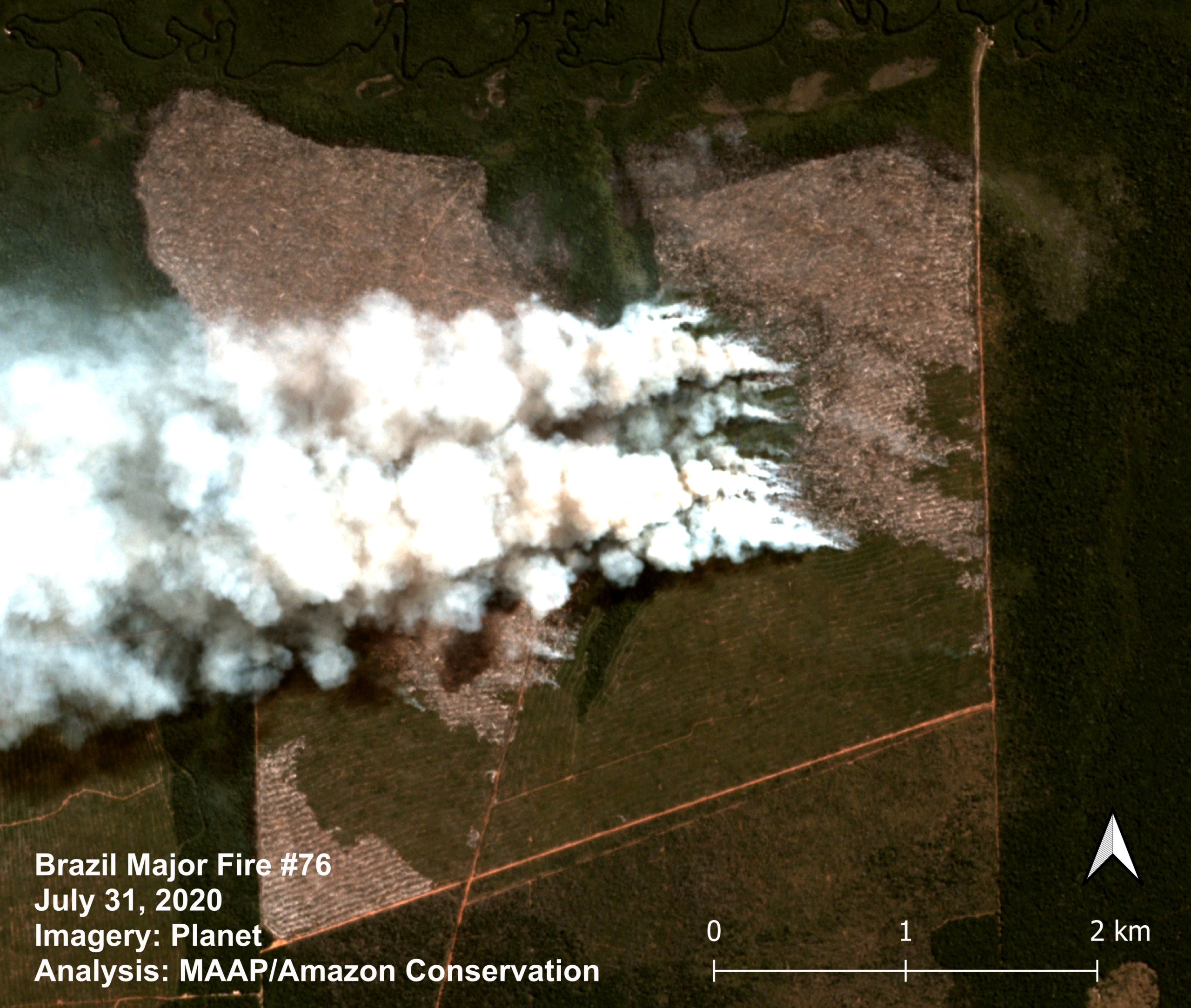
Brazilian Amazon Fire #76 (August 1, 2020)

2) Forest Fires 

Brazilian Amazon Fire #218, August 2020

Brazilian Amazon Fire #195, August 2020

3) Grassland (Savanna) Fires 

Brazilian Amazon Fire #219, August 2020

*Notes and Methodology

The app specializes in filtering out thousands of the traditional heat-based fire alerts to prioritize only those burning large amounts of biomass (defined here as a major fire).

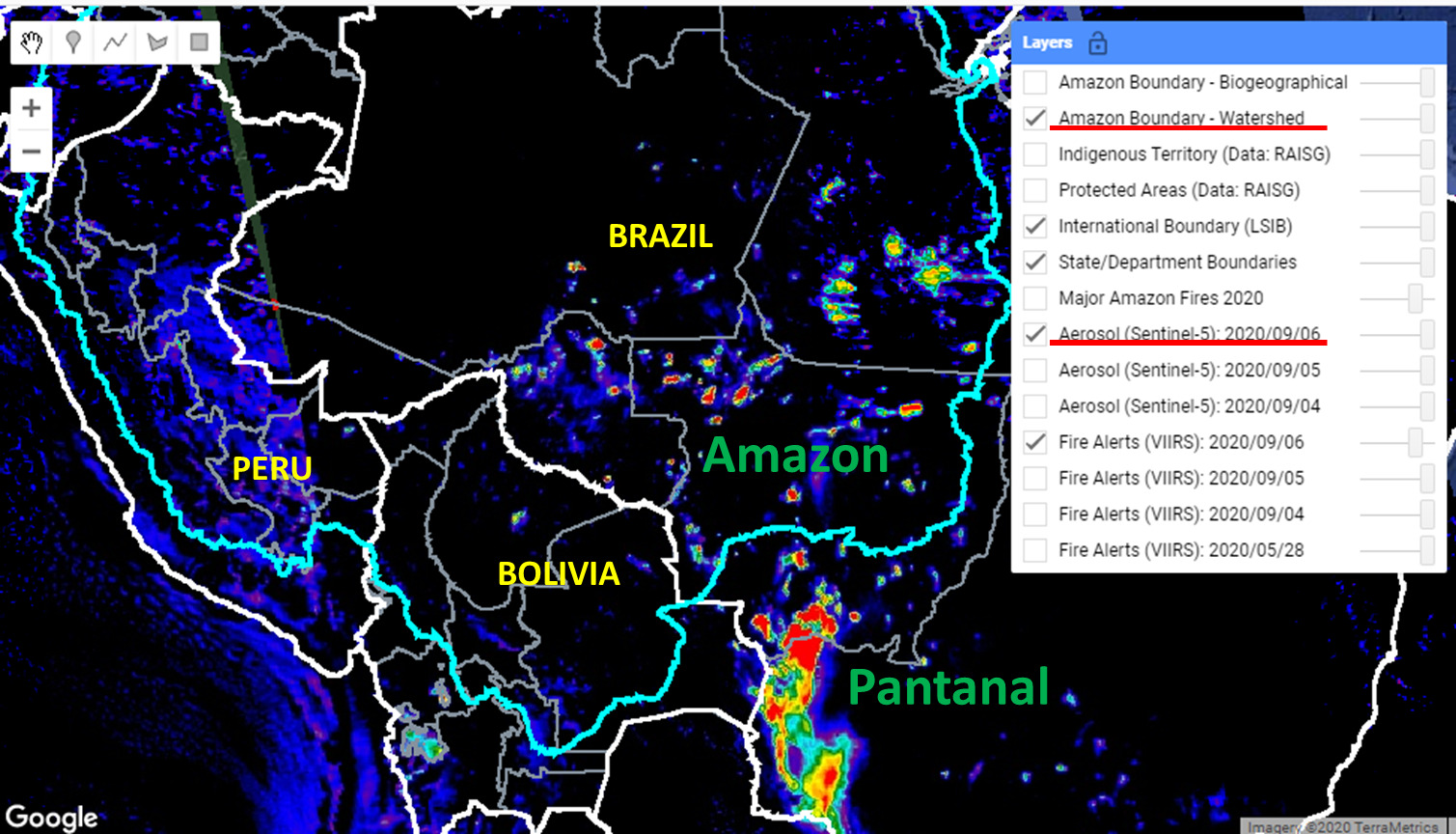
In a novel approach, the app combines data from the atmosphere (aerosol emissions in smoke) and the ground (heat anomaly alerts) to effectively detect and visualize major Amazon fires.

When fires burn, they emit gases and aerosols. A new satellite (Sentinel-5P from the European Space Agency) detects these aerosol emissions. Thus, the major feature of the app is detecting elevated aerosol emissions which in turn indicate the burning of large amounts of biomass. For example, the app distinguishes small fires clearing old fields (and burning little biomass) from larger fires burning recently deforested areas or standing forest (and burning lots of biomass).

We define “major fire” as one showing elevated aerosol emission levels on the app, thus indicating the burning of elevated levels of biomass. This typically translates to an aerosol index of >1 (or cyan-green to red on the app). To identify the exact source of the elevated emissions, we reduce the intensity of aerosol data in order to see the underlying terrestrial heat-based fire alerts. Typically for major fires, there is a large cluster of alerts. The major fires are then confirmed, and burn areas estimated, using high-resolution satellite imagery from Planet Explorer.

See MAAP #118 for additional details.

No fires permitted in the Brazilian state of Mato Grosso after July 1, 2020. No fires permitted in all of Brazilian Amazon after July 15, 2020. Thus, we defined “illegal” as any major fires detected after these respective dates.

There was no available Sentinel-5 aerosol data on July 4, 15, and 26.

Acknowledgements

This analysis was done by Amazon Conservation in collaboration with SERVIR Amazonia.

Citation

Finer M, Nicolau A, Vale H, Villa L, Mamani N (2020) Amazon Fire Tracker 2020: Images of the Brazilian Amazon Fires. MAAP.

Amazon Fire Tracker 2020: Over 200 Major Fires as of Aug 10

Brazilian Amazon Fire #76, July 2020. Imagery: Planet. Click to Enlarge.

Our innovative new app for Real-time Amazon Fire Monitoring has detected over 200 major fires in 2020.

The app specializes in filtering out thousands of the traditional heat-based fire alerts to prioritize only those burning large amounts of biomass (defined here as a major fire).*

Our key findings include:

  • We have detected 227 major Amazon fires (Brazil 220, Bolivia 6; Peru 1), as of August 10.
    ,
  • The vast majority of major fires have been in the Brazilian Amazon, where a strikingly high number (85%) have burned recently deforested areas. Thus, the fires are actually a smoking indicator of the rampant deforestation now in Brazil.
    k
  • In Brazil, we have detected two forest fires, but this risk increases as we get deeper into the dry season. The rest of the fires have been on older fields.
    l
  • In Brazil, the vast majority (94%) of the major fires have been illegal, in violation of the state and national fire moratoriums established in July. In fact, despite the moratoriums, the number of major fires is accelerating: 143 so far in August following 77 in May through July.
    m
  • In Brazil, 14 of the fires have been in Protected Areas.
    k
  • In the Bolivian and Peruvian Amazon, we have recently started detecting fires in the drier ecosystems (savannahs and grasslands).

See below for a more detailed breakdown of the results.

Additional Results

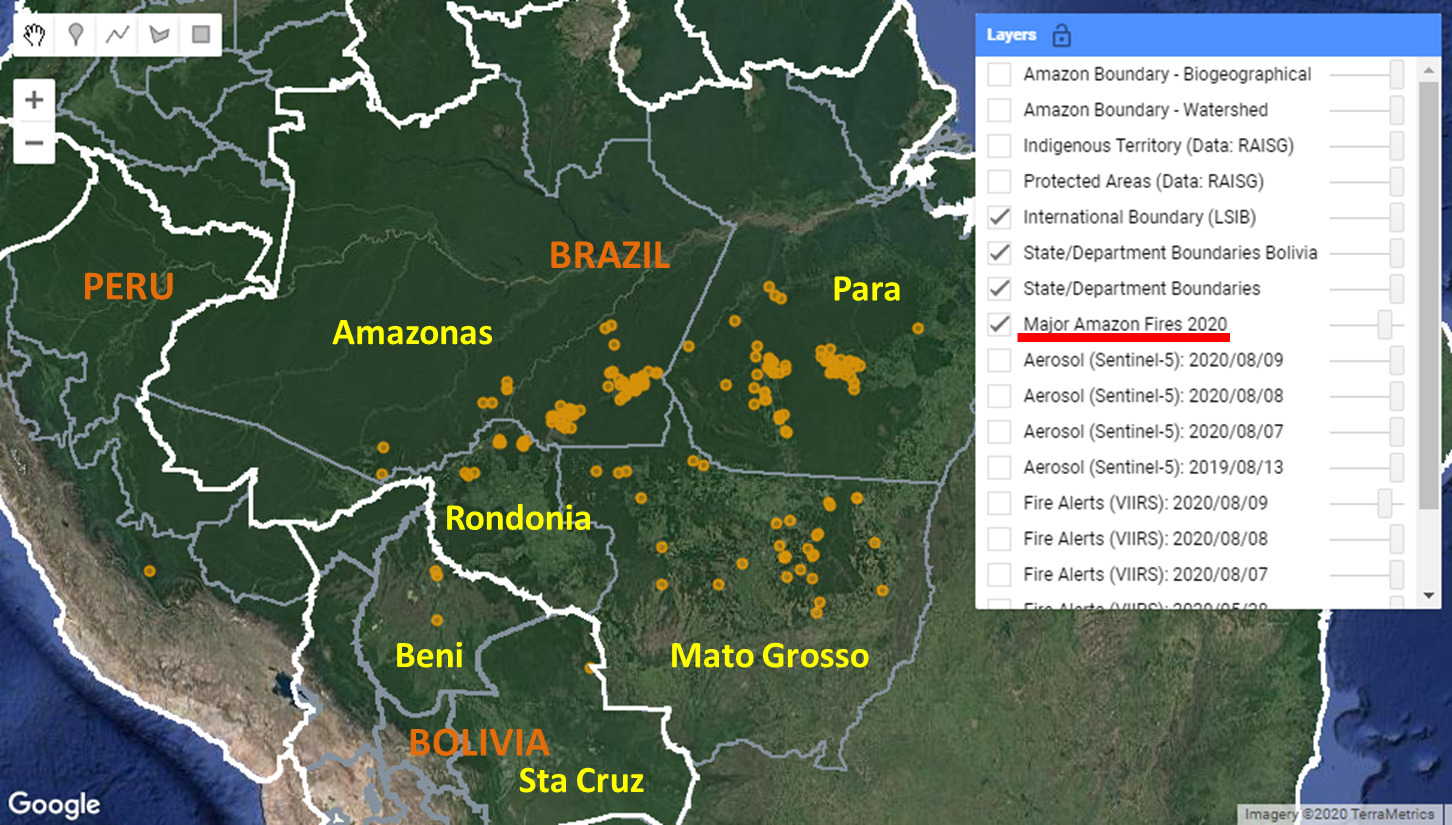
The Base Map is a screen shot of the app’s “Major Amazon Fires 2020” layer.

Base Map. Major Fires 2020. Data: MAAP.

 

The vast majority of the fires have been in the Brazilian Amazon: Pará (37%) and Amazonas (39%), followed by Mato Grosso (17%) and Rondônia (8%).

Importantly, the vast majority of the major fires in the Brazilian Amazon (85%) have burned recently deforested areas (cleared between 2018 and 2020) covering 280,000 acres (113,000 hectares). Thus, we argue that the central issue is actually deforestation and the fires are actually a smoking indicator of this forest loss.

We have detected the first two forest fires, burning 388 acres (1,447 hectares) in Mato Grosso and Para.

The rest of the major fires have been on older cattle or agricultural lands (deforested prior to 2018).

The most impacted protected areas are Jamanxim and Altamira National Forests in Pará. We emphasize, however, that these fires were burning recently deforested areas (not forest fires) and so, again, the primary issue is deforestation.

In Brazil, the vast majority of the major fires (94%) appear to be illegal as they violate the state and national government mandated fire moratoriums established in July. In fact, despite the moratoriums, the number of major fires is accelerating: 143 so far in August, following 64 in July, 12 in June, and the first one in May.

In the Bolivian Amazon, we have recently started detecting fires in the savannahs in the department of Beni. We also detected one fire in a recently deforested area in the Santa Cruz department.

In the Peruvian Amazon, we have recently started detecting fires in the upper elevation grasslands. The biggest one was actually within a protected area (Otishi National Park). There have also been smaller grassland fires near the buffer zone of upper Manu National Park.

Key Examples of 2020 Fires

Overall our key finding is that most major Brazilian Amazon fires are burning recently deforested areas, and not raging forest fires. Below is a series of satellite image time-lapse videos showing examples of recent deforestation followed by a major 2020 fire.

Brazilian Amazon Fire #54, July 2020


Brazilian Amazon Fire #59, July 2020


Brazilian Amazon Fire #76, July 2020


Brazilian Amazon Fire #110, August 2020

*Notes and Methodology

In a novel approach, the app combines data from the atmosphere (aerosol emissions in smoke) and the ground (heat anomaly alerts) to effectively detect and visualize major Amazon fires.

When fires burn, they emit gases and aerosols. A new satellite (Sentinel-5P from the European Space Agency) detects these aerosol emissions. Thus, the major feature of the app is detecting elevated aerosol emissions which in turn indicate the burning of large amounts of biomass. For example, the app distinguishes small fires clearing old fields (and burning little biomass) from larger fires burning recently deforested areas or standing forest (and burning lots of biomass).

We define “major fire” as one showing elevated aerosol emission levels on the app, thus indicating the burning of elevated levels of biomass. This typically translates to an aerosol index of >1 (or cyan-green to red on the app). To identify the exact source of the elevated emissions, we reduce the intensity of aerosol data in order to see the underlying terrestrial heat-based fire alerts. Typically for major fires, there is a large cluster of alerts. The major fires are then confirmed, and burn areas estimated, using high-resolution satellite imagery from Planet Explorer.

See MAAP #118 for additional details.

No fires permitted in the Brazilian state of Mato Grosso after July 1, 2020. No fires permitted in all of Brazilian Amazon after July 15, 2020. Thus, we defined “illegal” as any major fires detected after these respective dates.

There was no available Sentinel-5 aerosol data on July 4, 15, and 26.

Acknowledgements

This analysis was done by Amazon Conservation in collaboration with SERVIR Amazonia.

Citation

Finer M, Nicolau A, Villa L (2020) 200 Major Amazon Fires in 2020: Tracker Analysis. MAAP.

Amazon Fire Tracker 2020: Brazil Fire #12 (June 29)

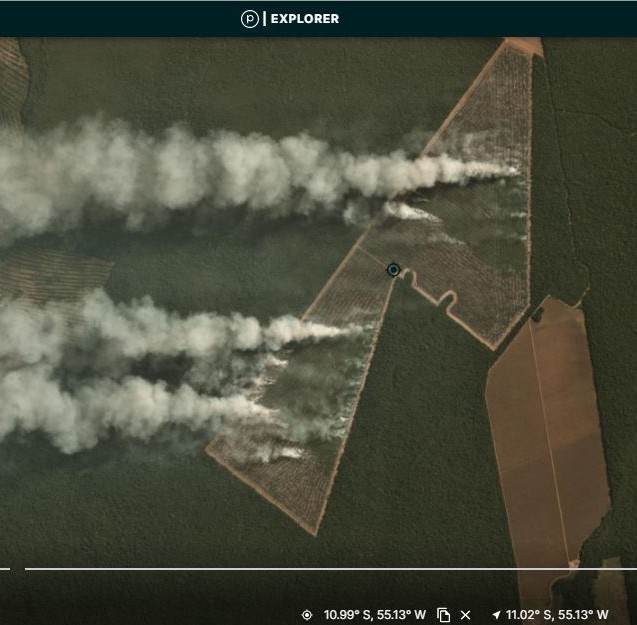
20202 Amazon major fire #12, in Mato Grosso Brazil, on June 29. Data: Planet. Analysis: MAAP/Amazon Conservation.

As presented in MAAP #118, Amazon Conservation launched a real-time fire monitoring app that specializes in the rapid and user-friendly detection and visualization of major Amazon fires.

In a novel approach, the app combines data from the atmosphere (aerosol emissions in smoke) and the ground (heat anomalies) to effectively monitor large Amazon fires.

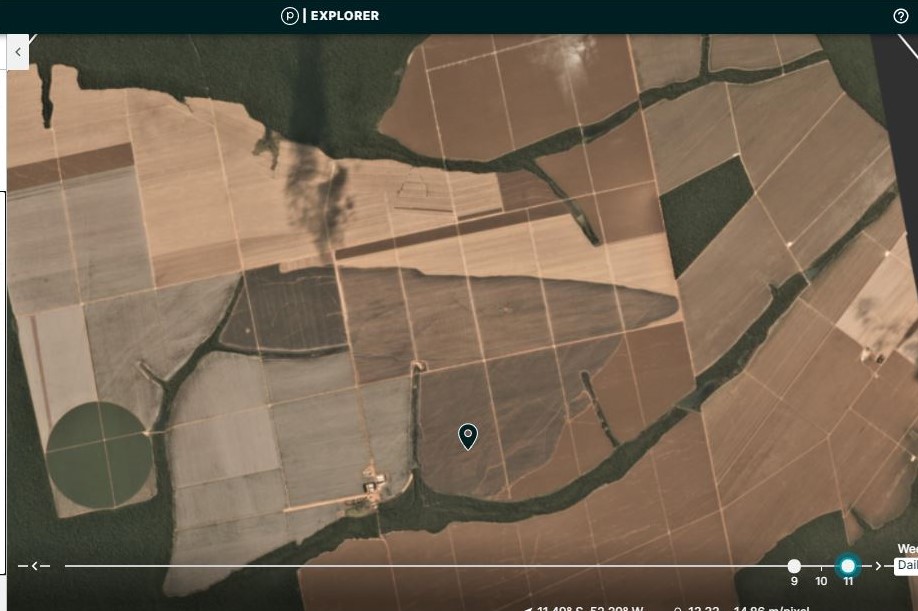
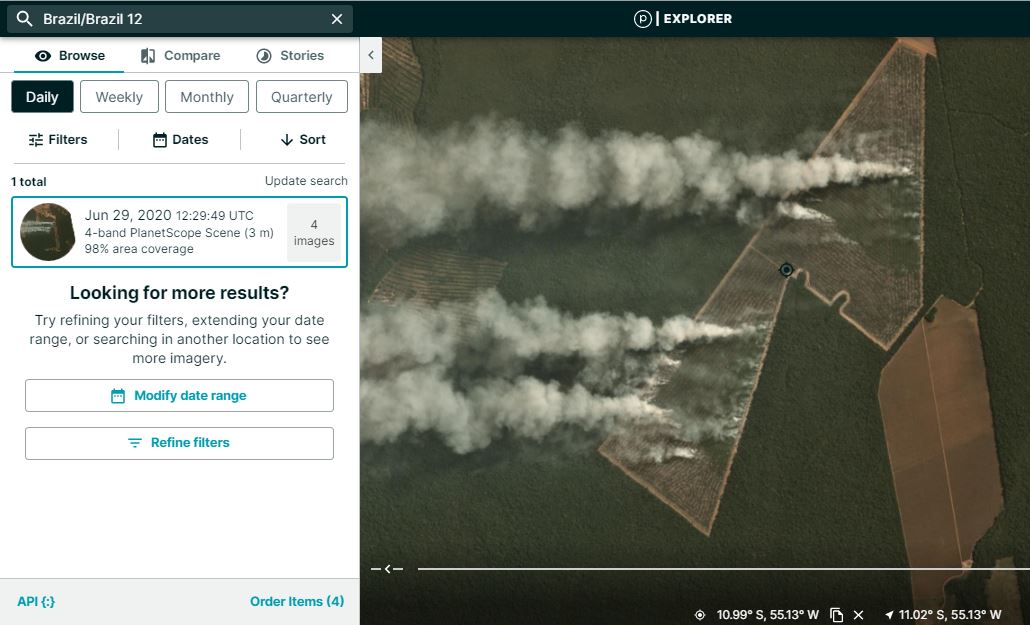
As detailed below, the app just detected the 12th major Amazon fire of the year on June 29, 2020 (see the high-resolution image to the right).

It burned 587 hectares (1,451 acres) of land deforested in 2019.

Thus far, all 12 major Amazon fires of 2020 have:

  • Occured in the state of Mato Grosso, in the southeastern Brazilian Amazon.
  • Burned recently deforested areas (that is, areas deforested in 2018, 2019, or 2020). In other words, these are not forest fires. See MAAP #113 for background on this important point.

Below, we describe the process of using the app to detect and confirm the fire on June 29.


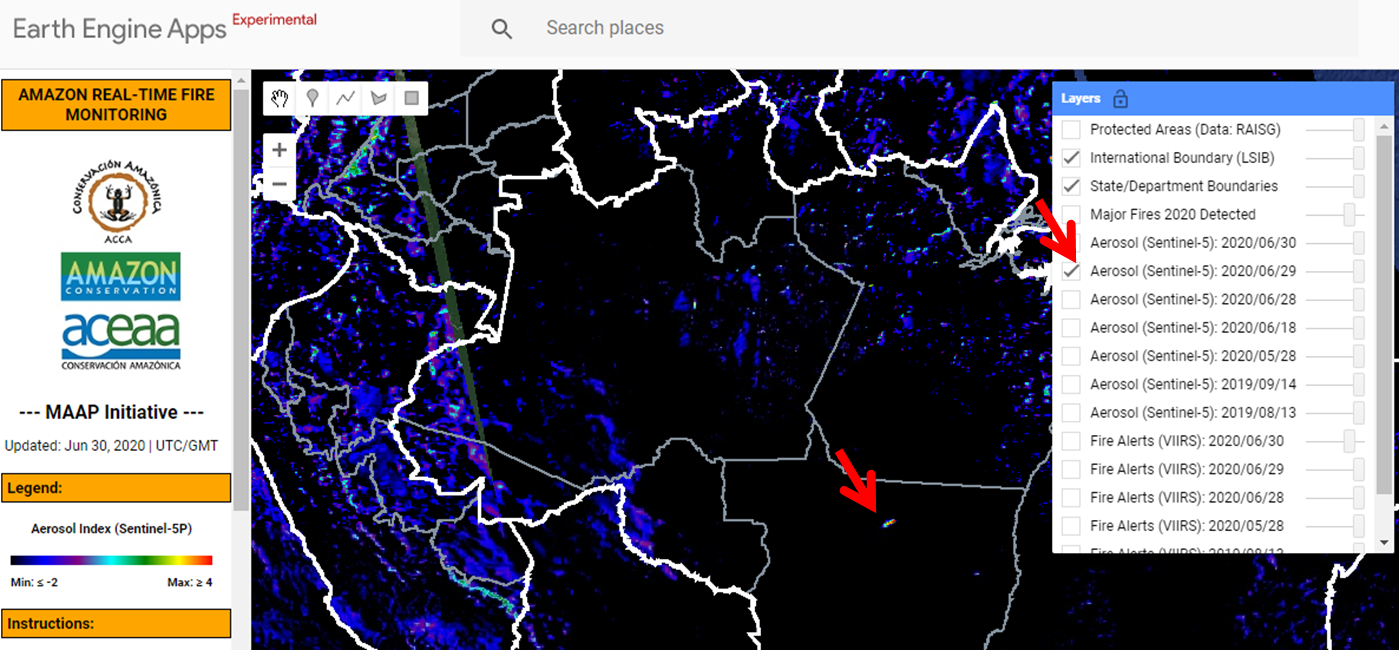
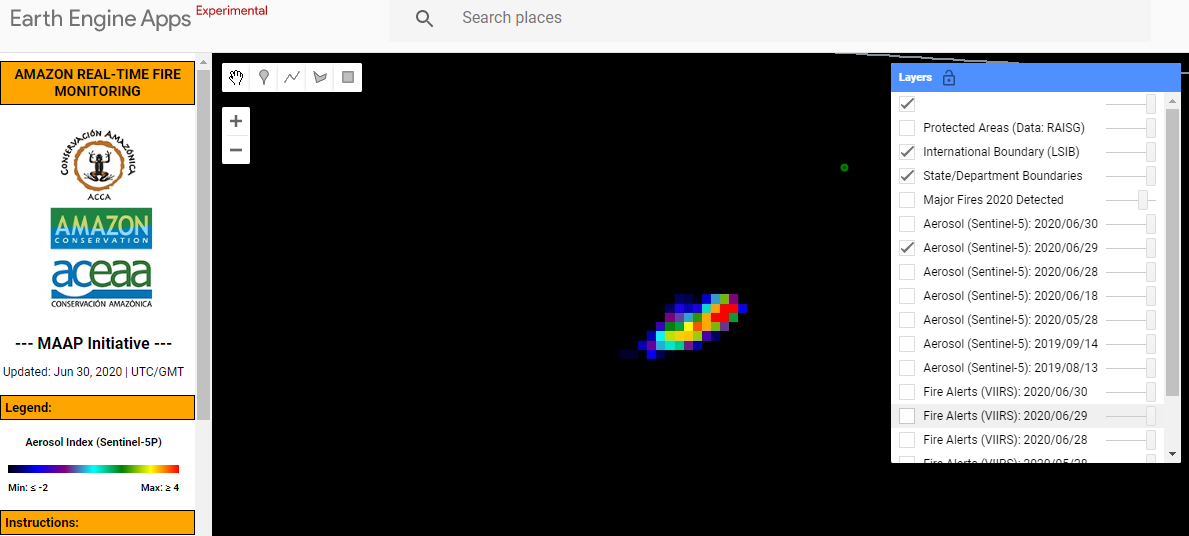
Step 1. Detection of elevated emissions in the southeastern Brazilian Amazon (Mato Grosso).


Step 2. Zoom in to confirm the elevated aerosol emissions, indicating the burning of abundant biomass.

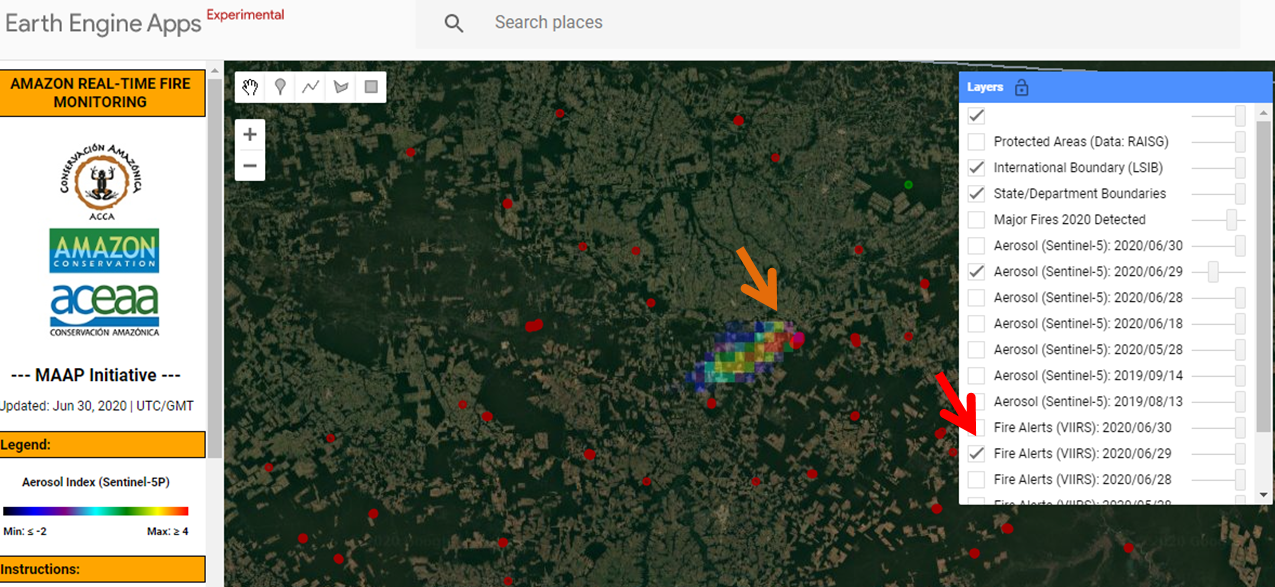
Step 3. Adjust the transparency to see the underlying fire alerts that indicate the exact location of the fires. Obtain coordinates of the source of the fires.


Step 4. Confirm fire with satellite imagery. For example, here is a high resolution image from Planet Explorer showing the fire burning on June 29.

Step 5. Using Planet’s extensive imagery archive, we were able to determine that the fires were burning an area deforested in 2019 (and not a forest fire). In the timelapse below, see that the deforestation occurred between September and October 2019, and then burned on June 29, 2020. The final image shows the day after the fires, June 30, to see the full extent of the burn.

Coordinates

-10.99, -55.13

References

Gorelick, N., Hancher, M., Dixon, M., Ilyushchenko, S., Thau, D., & Moore, R. (2017). Google Earth Engine: Planetary-scale geospatial analysis for everyone. Remote Sensing of Environment.
Planet Team (2017). Planet Application Program Interface: In Space for Life on Earth. San Francisco, CA. https://api.planet.com

Acknowledgements

This work was supported by the following major funders: USAID/NASA (SERVIR), Global Forest Watch Small Grants Fund (WRI), Norwegian Agency for Development Cooperation (NORAD),  International Conservation Fund of Canada (ICFC), Metabolic Studio, and Erol Foundation.

Citation

Finer M, Villa L (2020) Amazon Fire Tracker 2020: Brazil #12 (June 29). MAAP.

MAAP #122: Amazon Deforestation 2019

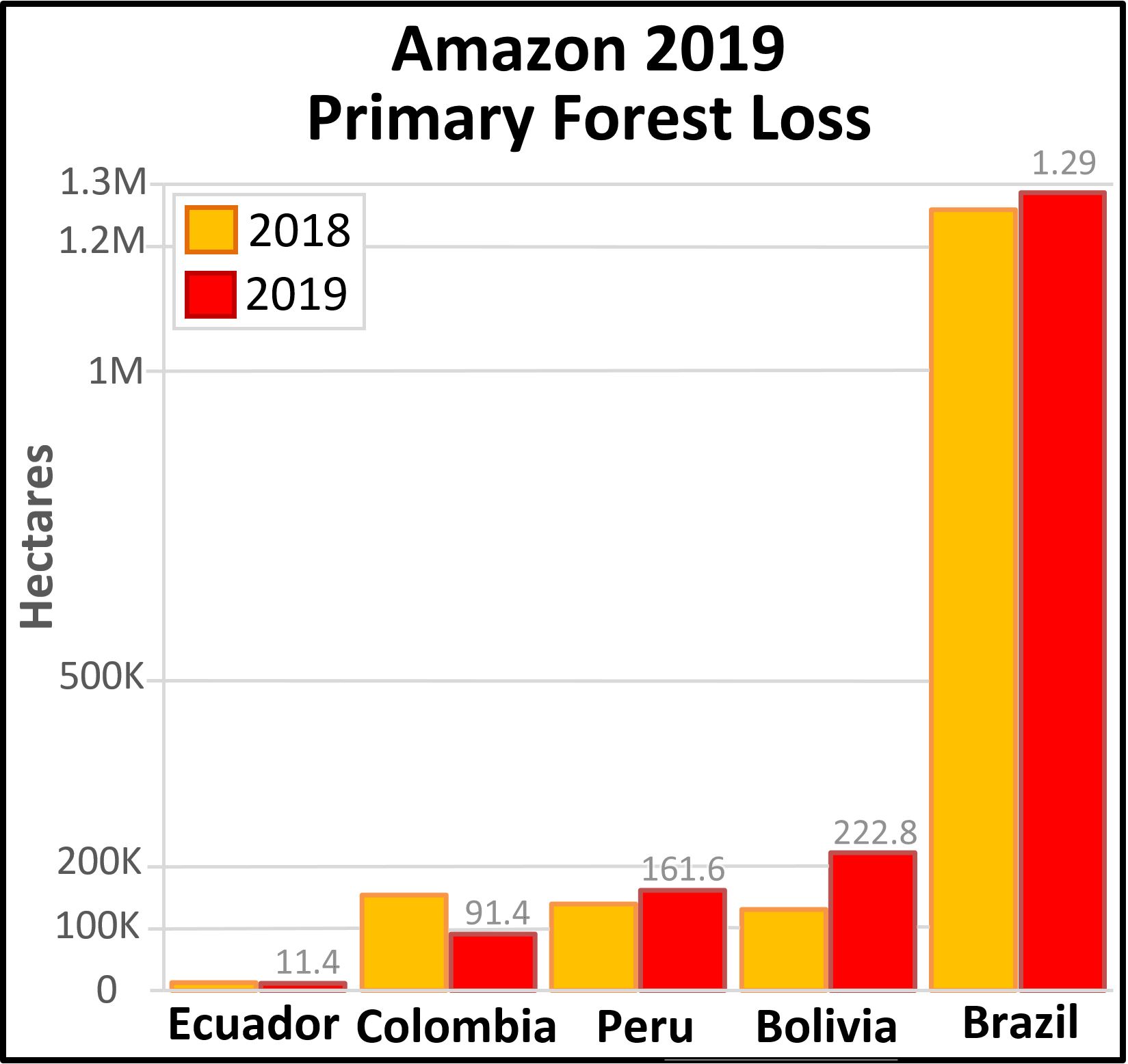
Table 1. Primary forest loss for 2019 (red) compared to 2018 (orange). Data: Hansen/UMD/Google/USGS/NASA, MAAP.

Newly released data for 2019 reveals the loss of over 1.7 million hectares (4.3 million acres) of primary Amazon forest in our 5 country study area (Bolivia, Brazil, Colombia, Ecuador, and Peru).* That is twice the size of Yellowstone National Park.

Table 1 shows 2019 deforestation (red) in relation to 2018 (orange).

Primary forest loss in the Brazilian Amazon (1.29 million hectares) was over 3.5 times higher than the other four countries combined, with a slight increase in 2019 relative to 2018. Many of these areas were cleared in the first half of the year and then burned in August, generating international attention.

Primary forest loss rose sharply in the Bolivian Amazon (222,834 hectares), largely due to uncontrolled fires escaping into the dry forests of the southern Amazon.

Primary forest loss rose slightly in the Peruvian Amazon (161,625 hectares) despite a relatively successful crackdown on illegal gold mining, pointing to small-scale agriculture (and cattle) as the main driver.

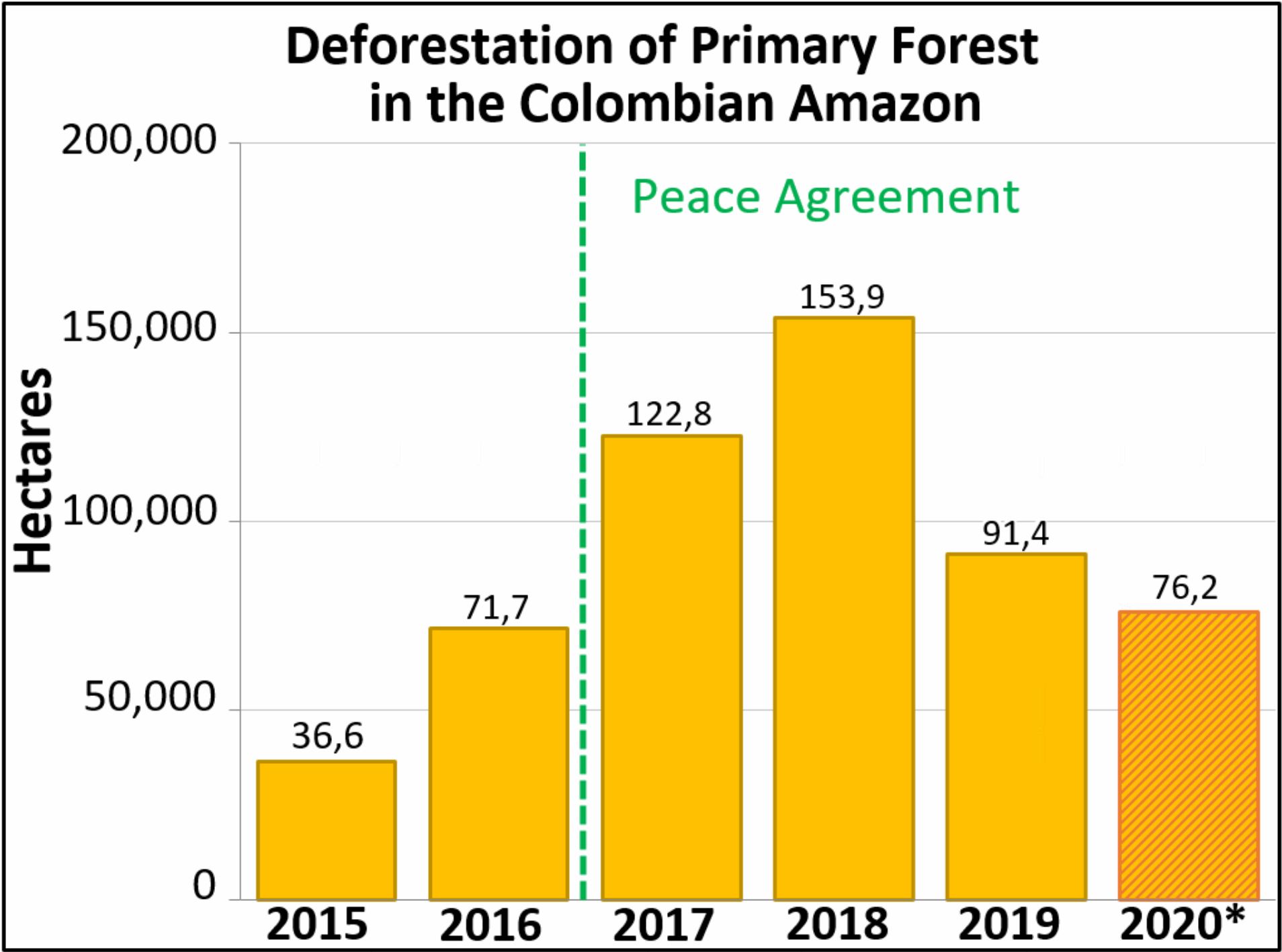
On the positive side, primary forest loss decreased in the Colombian Amazon (91,400 hectares) following a major spike following the 2016 peace accords (between the government and FARC). It is worth noting, however, that we have now documented the loss of 444,000 hectares (over a million acres) of primary forest in the Colombian Amazon in the past four years since the peace agreement (see Annex).

*Two important points about the data. First, we use annual forest loss from the University of Maryland to have a consistent source across all five countries. Second, we applied a filter to only include loss of primary forest (see Methodology).

2019 Deforestation Hotspots Map

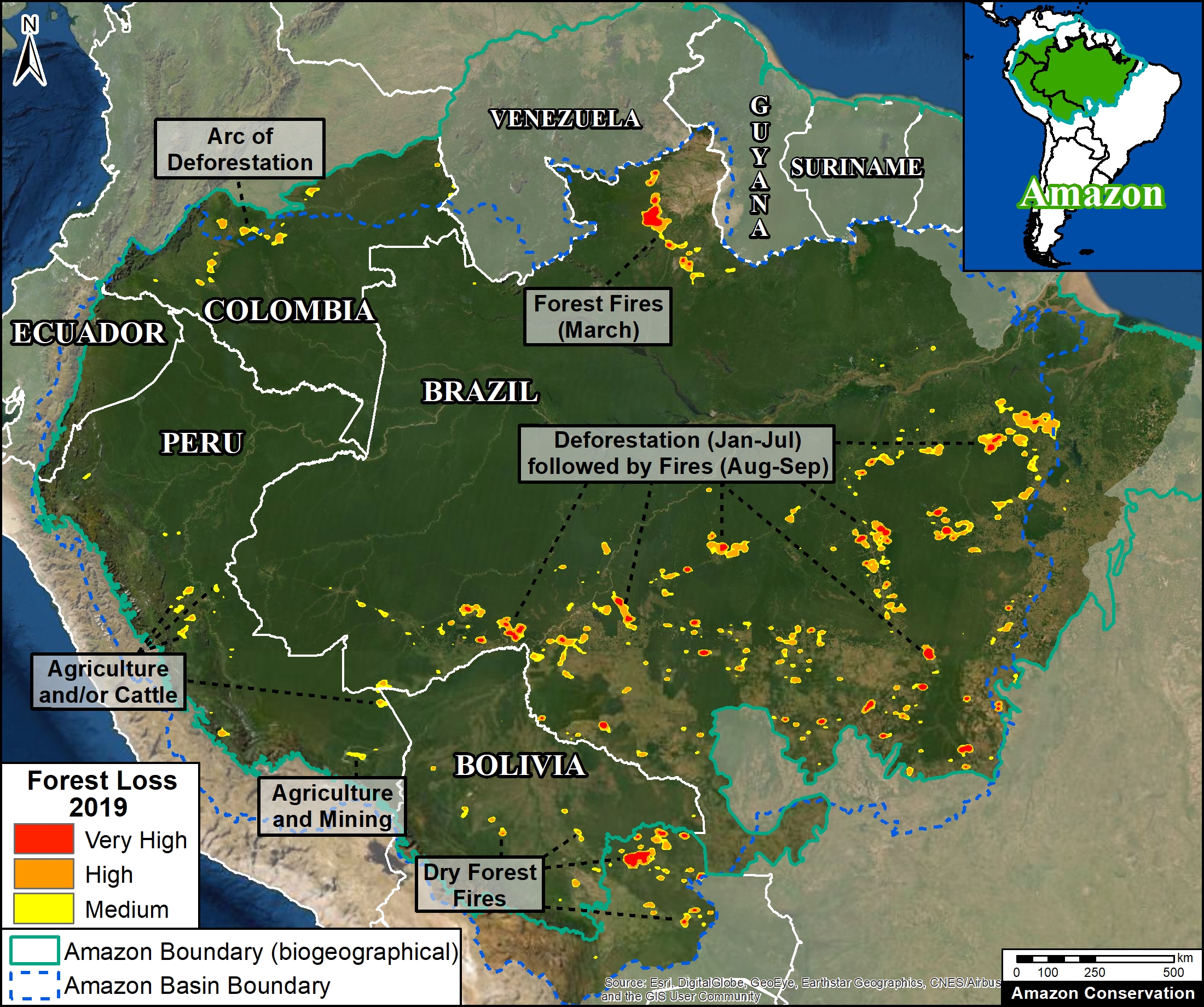
The Base Map below shows the major 2019 deforestation hotspots across the Amazon.

2019 deforestation hotspots across the Amazon. Data: Hansen/UMD/Google/USGS/NASA, MAAP.

Many of the major deforestation hotspots were in Brazil. Early in the year, in March, there were uncontrolled fires up north in the state of Roraima. Further south, along the Trans-Amazonian Highway, much of the deforestation occurred in the first half of the year, followed by the high profile fires starting in late July. Note that many of these fires were burning recently deforested areas, and were not uncontrolled forest fires (MAAP #113).

The Brazilian Amazon also experienced escalating gold mining deforestation in indigenous territories (MAAP #116).

Bolivia also had an intense 2019 fire season. Unlike Brazil, many were uncontrolled fires, particularly in the Beni grasslands and Chiquitano dry forests of the southern Bolivian Amazon (MAAP #108).

In Peru, although illegal gold mining deforestation decreased (MAAP #121), small-scale agriculture (including cattle) continues to be a major driver in the central Amazon (MAAP #112) and an emerging driver in the south.

In Colombia, there is an “arc of deforestation” in the northwestern Amazon. This arc includes four protected areas (Tinigua, Chiribiquete and Macarena National Parks, and Nukak National Reserve) and two Indigenous Reserves (Resguardos Indígenas Nukak-Maku and Llanos del Yari-Yaguara II) experiencing substantial deforestation (MAAP #120). One of the main deforestation drivers in the region is conversion to pasture for land grabbing or cattle ranching.

Annex – Colombia peace accord trend

Annex 1. Deforestation of primary forest in the Colombian Amazon, 2015-20. Data: Hansen/UMD/Google/USGS/NASA, UMD/GLAD. *Until May 2020

Methodology

The baseline forest loss data presented in this report were generated by the Global Land Analysis and Discovery (GLAD) laboratory at the University of Maryland (Hansen et al 2013) and presented by Global Forest Watch. Our study area is strictly what is highlighted in the Base Map.

For our estimate of primary forest loss, we used the annual “forest cover loss” data with density >30% of the “tree cover” from the year 2001. Then we intersected the forest cover loss data with the additional dataset “primary humid tropical forests” as of 2001 (Turubanova et al 2018). For more details on this part of the methodology, see the Technical Blog from Global Forest Watch (Goldman and Weisse 2019).

For boundaries, we used the biogeographical limit (as defined by RAISG) for all countries except Bolivia, where we used the Amazon watershed limit (see Base Map).

All data were processed under the geographical coordinate system WGS 1984. To calculate the areas in metric units, the projection was: Peru and Ecuador UTM 18 South, Bolivia UTM 20 South, Colombia MAGNA-Bogotá, and Brazil Eckert IV.

Lastly, to identify the deforestation hotspots, we conducted a kernel density estimate. This type of analysis calculates the magnitude per unit area of a particular phenomenon, in this case forest cover loss. We conducted this analysis using the Kernel Density tool from Spatial Analyst Tool Box of ArcGIS. We used the following parameters:

Search Radius: 15000 layer units (meters)
Kernel Density Function: Quartic kernel function
Cell Size in the map: 200 x 200 meters (4 hectares)
Everything else was left to the default setting.

For the Base Map, we used the following concentration percentages: Medium: 7%-10%; High: 11%-20%; Very High: >20%.

References

Goldman L, Weisse M (2019) Explicación de la Actualización de Datos de 2018 de Global Forest Watch. https://blog.globalforestwatch.org/data-and-research/blog-tecnico-explicacion-de-la-actualizacion-de-datos-de-2018-de-global-forest-watch

Hansen, M. C., P. V. Potapov, R. Moore, M. Hancher, S. A. Turubanova, A. Tyukavina, D. Thau, S. V. Stehman, S. J. Goetz, T. R. Loveland, A. Kommareddy, A. Egorov, L. Chini, C. O. Justice, and J. R. G. Townshend. 2013. “High-Resolution Global Maps of 21st-Century Forest Cover Change.” Science 342 (15 November): 850–53. Data available on-line from: http://earthenginepartners.appspot.com/science-2013-global-forest.

Turubanova S., Potapov P., Tyukavina, A., and Hansen M. (2018) Ongoing primary forest loss in Brazil, Democratic Republic of the Congo, and Indonesia. Environmental Research Letters  https://doi.org/10.1088/1748-9326/aacd1c 

Acknowledgements

We thank G. Palacios for helpful comments to earlier versions of this report.

This work was supported by the following major funders: Norwegian Agency for Development Cooperation (NORAD), Gordon and Betty Moore Foundation, International Conservation Fund of Canada (ICFC), Metabolic Studio, Erol Foundation, MacArthur Foundation, and Global Forest Watch Small Grants Fund (WRI).

Citation

Finer M, Mamani N (2020) 2019 Amazon Deforestation. MAAP: 122.

Amazon Fire Tracker 2020: Brazil #4 (June 17, 2020)

As presented in MAAP #118, Amazon Conservation launched a real-time fire monitoring app that specializes in detection of elevated aerosol emissions in the smoke coming from burning Amazon fires. As detailed below, the app just detected the fourth major Amazon fire of 2020 on June 17. All four fires thus far have been in the state of Mato Grosso and burning recently deforested areas (see MAAP #113 for background).

Step 1. Detection of elevated emissions in the southeastern Brazilian Amazon (Mato Grosso).


Step 2. Zoom in on the emissions.

Step 3. Adjust the transparency to see the underlying fire alerts that indicate the exact location of the fires. Obtain coordinates of the source of the fires.


Step 4. Check the satellite imagery in Planet Explorer. Here is a high resolution Planet image showing the fire burning on June 17. Also see the slider below, comparing the the June 17 fires with a pre-fire image from June 10.

Imagery source: Planet.

[twenty20 img1=”9167″ img2=”9168″ width=”75%” offset=”0.5″]

Imagery source: Planet.

Step 5. Using Planet’s extensive imagery archive, we were able to determine that the fires were burning an area deforested in 2019 (and not a forest fire).

Coordinates: -10.45, -53.55

Annex – Fire Alert vs. Aerosol Emission Data

This slider shows us how aerosol emission data allows users to prioritize hundreds (or thousands) of heat-based fire alerts. In other words, the aerosol data indicates just the fires that are  actually burning lots of biomass and putting out abundant smoke.

[twenty20 img1=”9170″ img2=”9169″ offset=”0.5″]

References

Gorelick, N., Hancher, M., Dixon, M., Ilyushchenko, S., Thau, D., & Moore, R. (2017). Google Earth Engine: Planetary-scale geospatial analysis for everyone. Remote Sensing of Environment.”
https://earthengine.google.com/faq/
Planet Team (2017). Planet Application Program Interface: In Space for Life on Earth. San Francisco, CA. https://api.planet.com

Acknowledgements

This work was supported by the following major funders: USAID/NASA (SERVIR), Global Forest Watch Small Grants Fund (WRI), Norwegian Agency for Development Cooperation (NORAD),  International Conservation Fund of Canada (ICFC), Metabolic Studio, and Erol Foundation.

Citation

Finer M, Villa L (2020) Amazon Fire Tracker 2020: Brazil #4 (June 17, 2020). MAAP.

MAAP: Amazon Fire Tracker #2 – Brazil, June 8 2020

As presented in MAAP #118, Amazon Conservation launched a real-time fire monitoring app that specializes in detection of elevated aerosol emissions from burning Amazon fires. As detailed below, the app detected the second major 2020 fire on June 8, 2020 in Mato Grosso, Brazil.

Step 1. Detection of elevated emissions in the southeastern Brazilian Amazon (Mato Grosso).


Step 2. Zoom in on the emissions, adjust the transparency to see the underlying fire alerts that indicate the fire location.


Step 3. Zoom in again to see precisely the fire location and obtain coordinates.

Step 4. Check the satellite imagery archive in Planet Explorer. Here is a Landsat image (30 meter resolution) showing the fire burned around 3,000 hectares (7,400 acres) of an area deforested in July 2018. Note that MAAP #113 made the important discovery that most of the 2019 Brazilian Amazon fires were burning recently deforested areas (and not uncontrolled forest fires).


Coordinates

lat: -12.57, lon: -54.06

References

Gorelick, N., Hancher, M., Dixon, M., Ilyushchenko, S., Thau, D., & Moore, R. (2017). Google Earth Engine: Planetary-scale geospatial analysis for everyone. Remote Sensing of Environment.”
https://earthengine.google.com/faq/

Acknowledgements

This work was supported by the following major funders: USAID/NASA (SERVIR), Global Forest Watch Small Grants Fund (WRI), Norwegian Agency for Development Cooperation (NORAD),  International Conservation Fund of Canada (ICFC), Metabolic Studio, and Erol Foundation.

Citation

Finer M, Villa L (2020) Amazon 2020 Fire Tracker #2 – Brazil, June 8. MAAP.

MAAP #119: Predicting 2020 Brazilian Amazon Fires

2019 Brazilian Amazon fire burning recently deforested area, not uncontrolled forest fire. Data: Planet; Analysis: MAAP.

The Brazilian Amazon fires made international headlines last year.

By analyzing an archive of satellite imagery (from Planet Explorer), we made the major discovery that many of the 2019 fires were actually burning recently deforested areas (MAAP #113). In fact, many of the fires were burning areas deforested earlier that same year of 2019.

Thus, we may predict 2020 fire locations based on identifying major deforestation events in the early months of this year.

Using a novel methodology*, we estimate the deforestation of over 150,000 hectares (373,240 acres) of primary forest in the Brazilian Amazon thus far in 2020 (through May 25). Thus, there is high potential for another intense fire season.

Below, we illustrate the process of predicting 2020 fires based on recent deforestation.

Note: In MAAP #118 we just reported that the first major fires of 2020 were in fact burning recently deforested areas (2018-19).


Predicting 2020 fires

In the Base Map, the yellow dots indicate the largest new deforestation events that we predict are likely 2020 fire locations. See below for satellite imagery examples (letters A-G). Two of the likely fire points are within protected areas (see Annex).

Base Map. Major 2020 deforestation events (yellow dots) as predictors of 2020 fire events. Data: Hansen/UMD/Google/USGS/NASA, UMD/GLAD, RAISG, MAAP. Click to Enlarge.

Examples of Major 2020 Deforestation Events

Below is a series of images showing the major deforestation events of 2020 that we predict are likely upcoming fire locations (see letters A-G on the Base Map above for context). The red arrows point to the major deforestation events. Note that all of the deforestation areas are surrounded by primary forest that could be impacted if fires escape. Also note that several deforestation areas are quite large, over 2,000 hectares (5,000 acres).

Zoom A (Mato Grosso)

Zoom A shows the deforestation of 775 hectares (1,915 acres) between January (left panel) and May 2020 (right panel), in the state of Mato Grosso.

Zoom A. Click to enlarge.

Zoom B (Mato Grosso)

Zoom B shows the deforestation of 205 hectares (510 acres) between January (left panel) and May 2020 (right panel), in the state of Mato Grosso.

Zoom B. Click to enlarge.

Zoom C (Mato Grosso)

Zoom C shows the deforestation of 395 hectares (980 acres) between January (left panel) and May 2020 (right panel), in the state of Mato Grosso.

Zoom C. Click to enlarge.

Zoom D (Mato Grosso)

Zoom D shows the deforestation of 300 hectares (735 acres) between January (left panel) and May 2020 (right panel), in the state of Mato Grosso.

Zoom D. Click to enlarge.

Zoom E (Rondônia)

Zoom E shows the deforestation of 840 hectares (2,075 acres) between January (left panel) and April 2020 (right panel), in the state of Rondônia.

Zoom F (Amazonas)

Zoom F shows the deforestation of 2,395 hectares (5,920 acres) between January (left panel) and May 2020 (right panel), in the state of Amazonas.

Zoom F. Click to enlarge.

Zoom G (Pará)

Zoom G shows the deforestation of 5,990 hectares (14,800 acres) between January (left panel) and May 2020 (right panel), in the state of Pará.

Zoom G. Click to enlarge.

Coordinates

World Eckert IV (Decimal Degrees) (X,Y)

Zoom A: -54.862624, -11.971904
Zoom B: -55.087026, -11.836788
Zoom C: -56.999405, -11.979054
Zoom D: -57.128192, -11.896948
Zoom E: -62.658907, -8.477944
Zoom F: -58.892358, -6.567775
Zoom G: -54.948419, -7.853721

2020 Fire Forecast

The July – September 2020 forecast points to an active fire season in most of the western Amazon – much of central and southern Peru, northern Bolivia and the Brazilian states of Acre and Rondônia. This year’s forecast indicates an active fire season of similar magnitude to those of 2005 and 2010, when widespread fires were observed in the region.

To more information check:https://firecast.cast.uark.edu/

Annex – Likely 2020 fire locations in relation to Protected Areas and Indigenous Territories


Methodology

*We developed a novel methodology to estimate deforestation of primary forest in the Brazilian Amazon. For 2020 data, we merged confirmed GLAD alerts (University of Maryland) with select DETER alerts from the Brazilian space  agency (INPE). This methodology takes advantage of the higher resolution of the GLAD alerts (30 meters vs 64 meters from DETER), but also the national expertise of the Brazilian government.

For the DETER data, we used the three deforestation and mining categories (DESMATAMENTO CR, DESMATAMENTO Vegetal, and MINERACAO). We avoided overlapping areas with the GLAD alerts.

Finally, we filtered the data for only primary forest loss. For our estimate of primary forest loss, we intersected the forest cover loss data with the additional dataset “primary humid tropical forests” as of 2001 (Turubanova et al 2018). We also removed all previous forest loss data 2001-19.

Acknowledgements

We thank J. Beavers, S. Novoa, K. Fernandes, and G. Palacios for helpful comments to earlier versions of this report.

This work was supported by the following major funders: Global Forest Watch Small Grants Fund (WRI), Norwegian Agency for Development Cooperation (NORAD),  International Conservation Fund of Canada (ICFC), Metabolic Studio, and Erol Foundation.

Citation

Finer M, Mamani N (2020) Deforestation and Fires in the Brazilian Amazon – 2020. MAAP: